HCW Shredding: Decharacterization After Treatment
RDC No. 222/2018 (ANVISA) and CONAMA Resolution No. 358/2005 require treatment of Group A (biological) and Group E (sharps) waste before final disposal. Shredding after autoclaving or incineration ensures complete decharacterization — prevents improper reuse, eliminates sharps accident risk and reduces volume by up to 80%.
Volume reduction generates 40-60% savings in transport and disposal, with fewer collection trips. ANVISA fines for non-compliance with RDC 222/2018 reach R$ 1.5 million, with civil and criminal liability for managers.
Process
- Source segregation — Separation by group (A, B, C, D, E) with color-coded containers.
- Packaging — Rigid containers (Group E) or labeled bags.
- Disinfection treatment — Autoclaving (121-134°C), microwave, incineration (800-1,200°C) or chemical treatment. Mandatory before shredding.
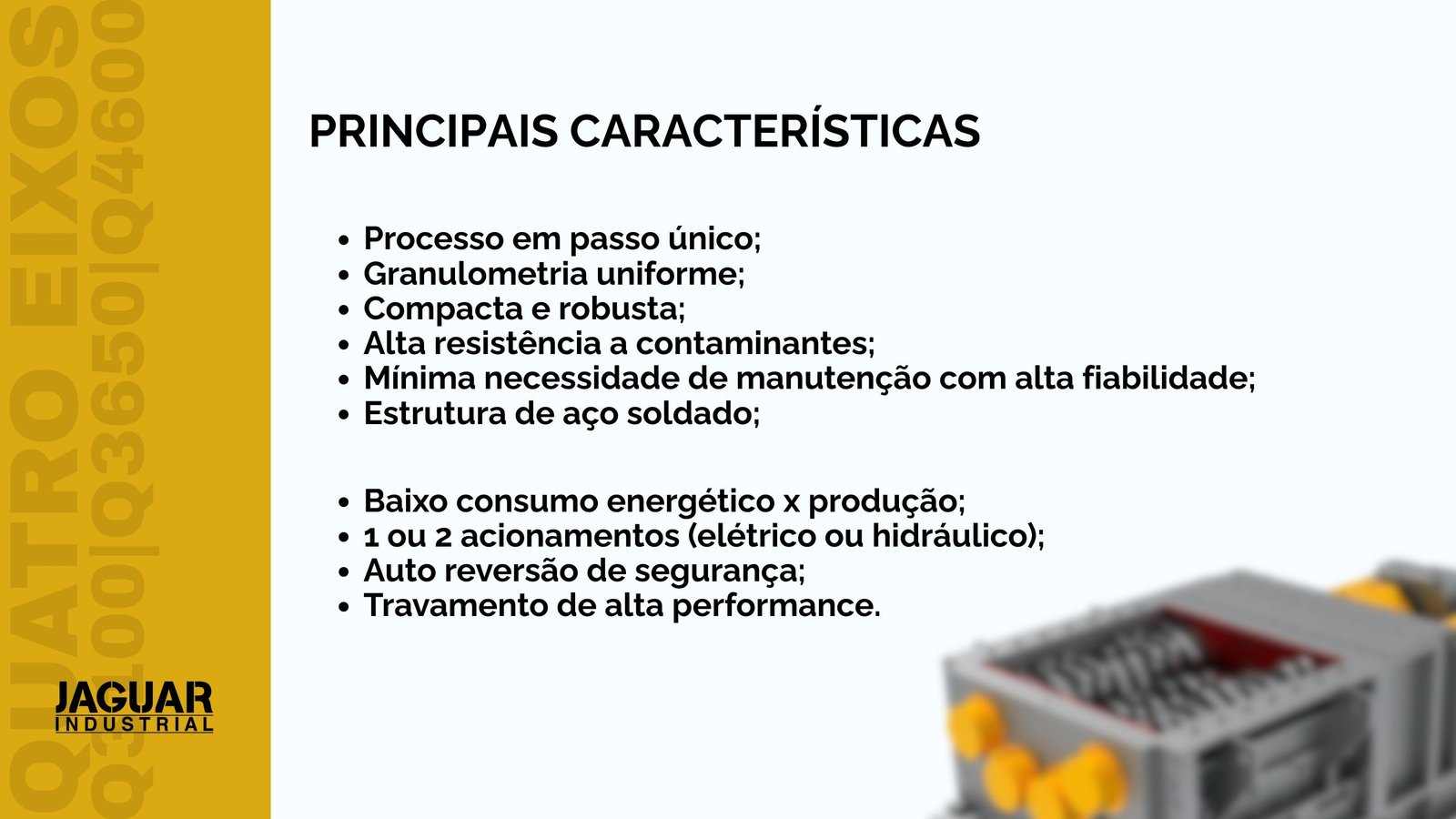
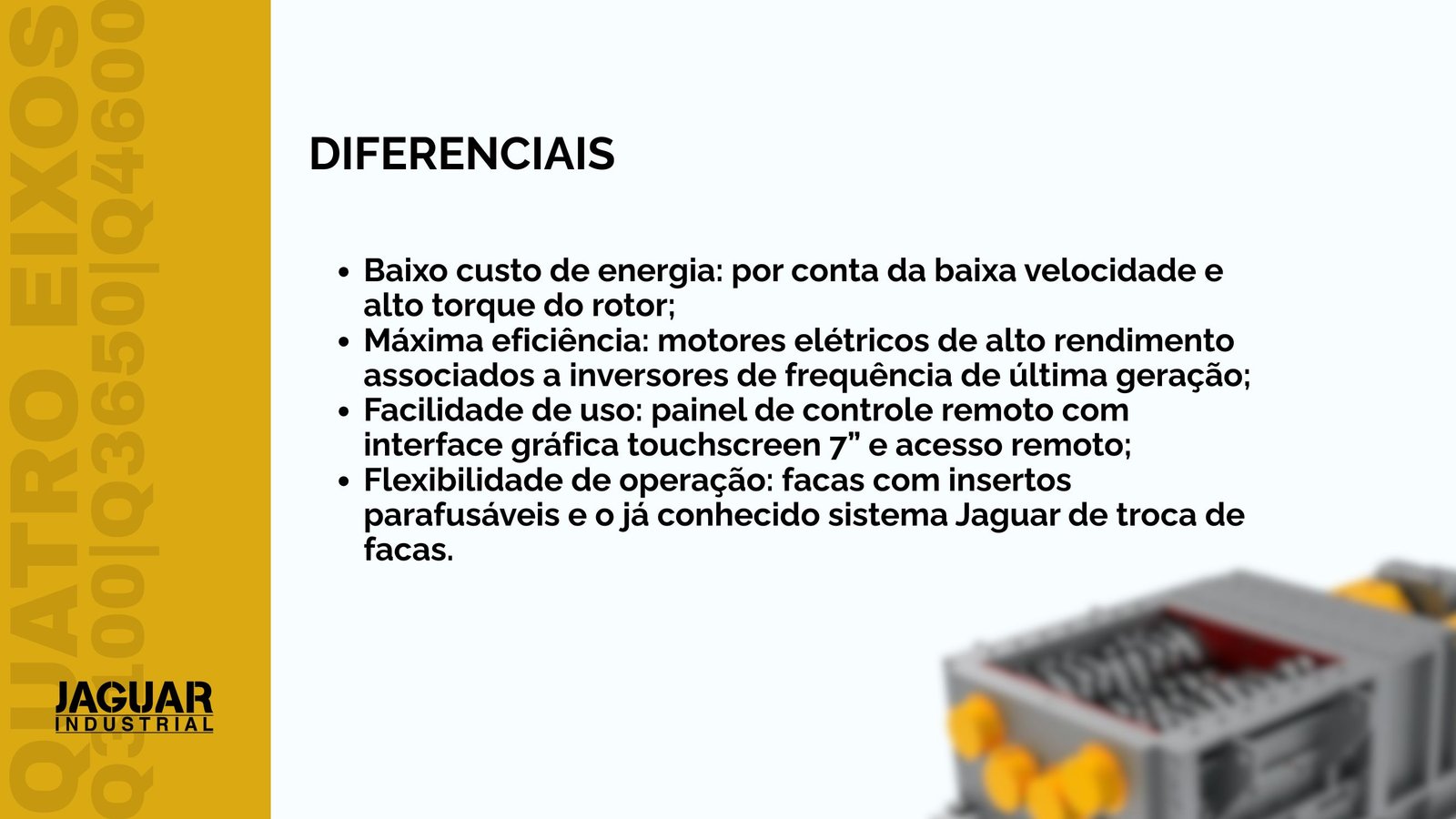
- Shredding — Serie Q (4-shaft) — Homogeneous particle size (15-120 mm, adjustable by screen). Complete decharacterization. Four hexagonal shafts with distributed shearing process heterogeneous materials, including metal sharps. Clutch protection and automatic reverse.
- Final disposal — After treatment and decharacterization, waste disposed as Class II in licensed landfills.
Equipment: Serie Q
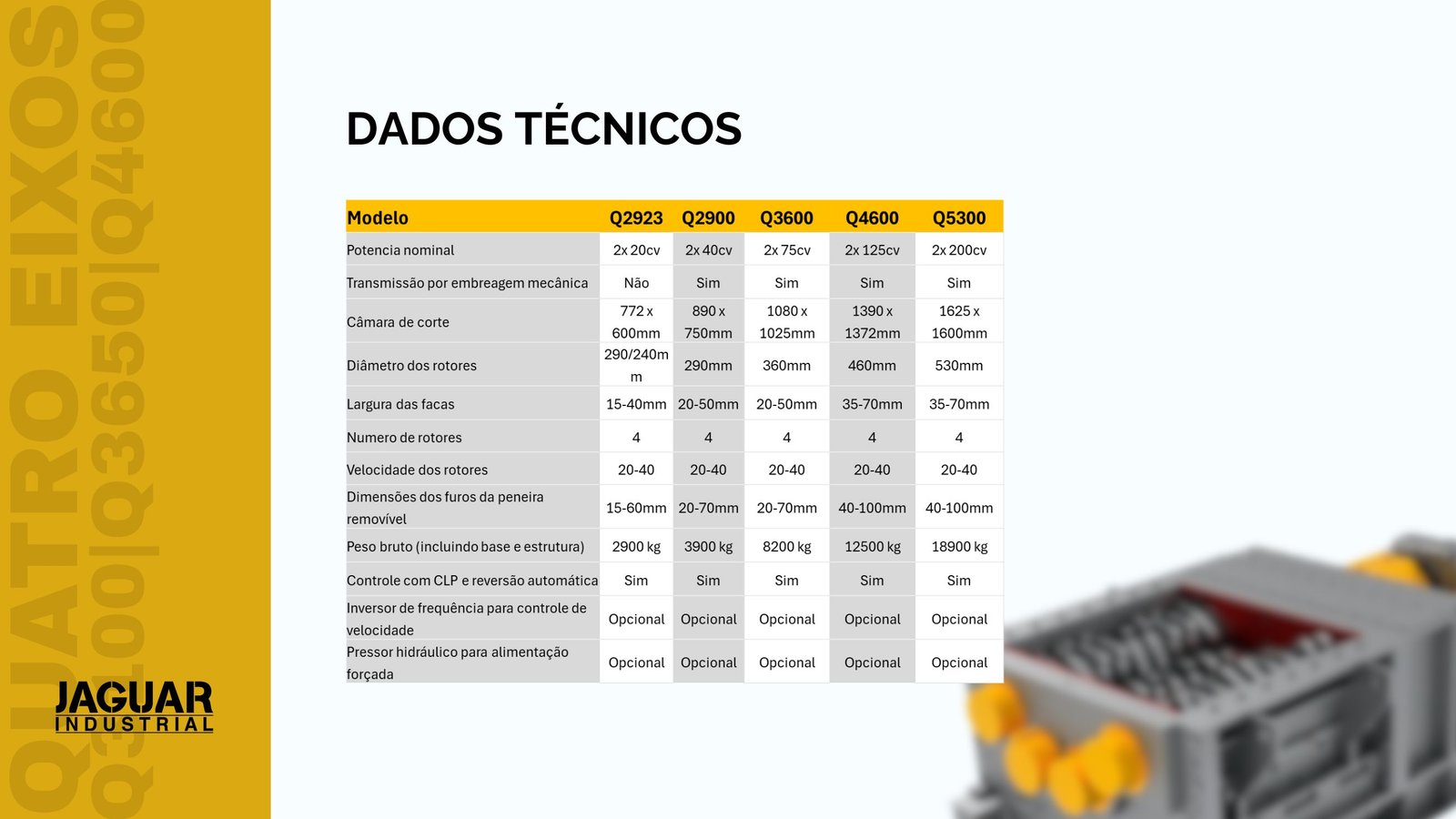
| Model | Power | Cutting chamber | Application |
|---|---|---|---|
| Q2923 | 2x20 hp | 772 x 600 mm | Clinics, offices, laboratories |
| Q3600 | 2x75 hp | 1,390 x 1,372 mm | Medium hospitals, treatment centers |
| Q4600 | 2x125 hp | 1,625 x 1,600 mm | Large hospitals, regional centers |
Removable screen (15-120 mm). Special steel blades with hard-facing weld overlay (58-62 HRC). PLC with automatic reverse. Low rotation (20-40 RPM) reduces noise and dust.
Serie Q shredders can be integrated with existing autoclaves and microwave systems.