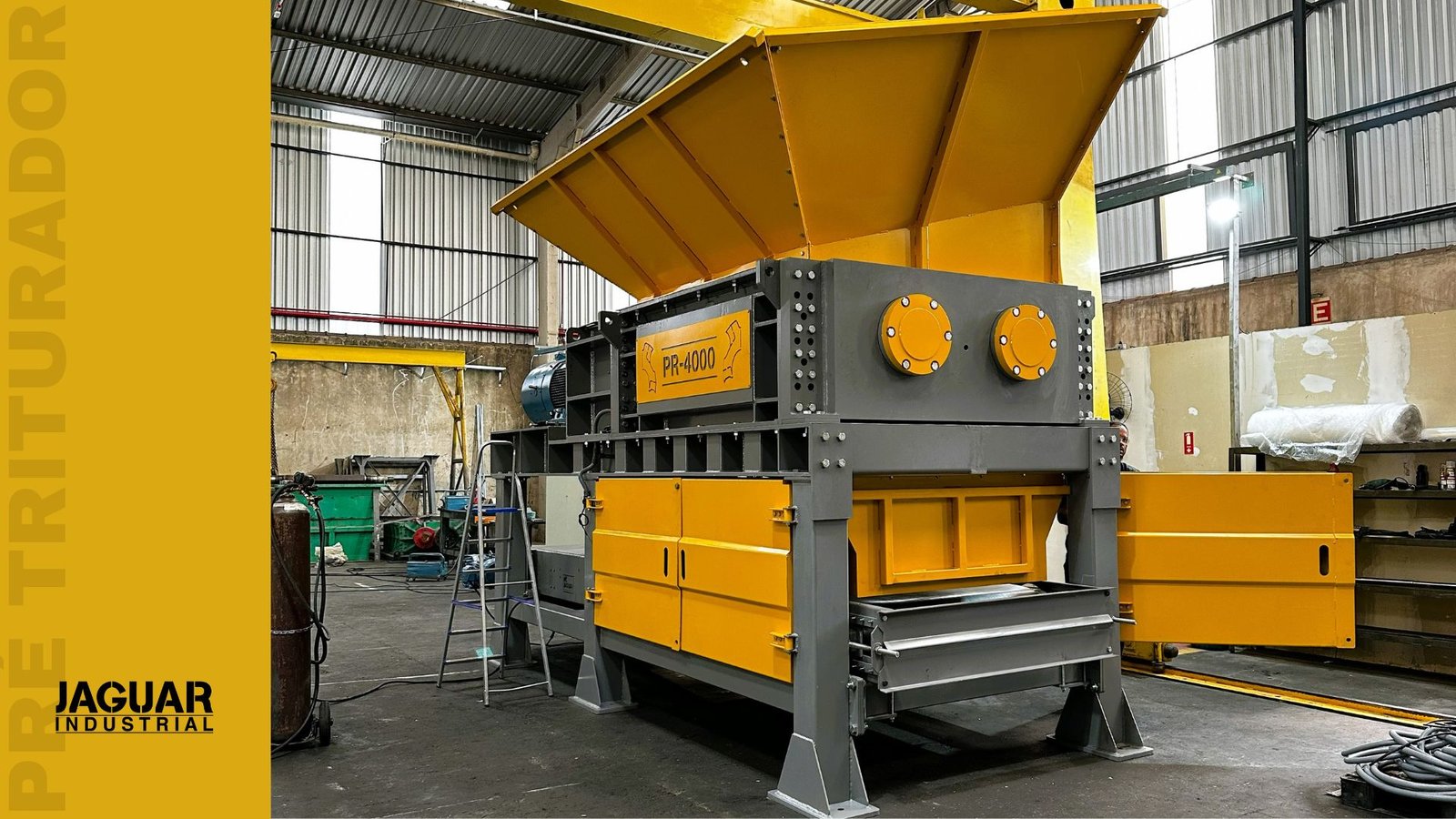
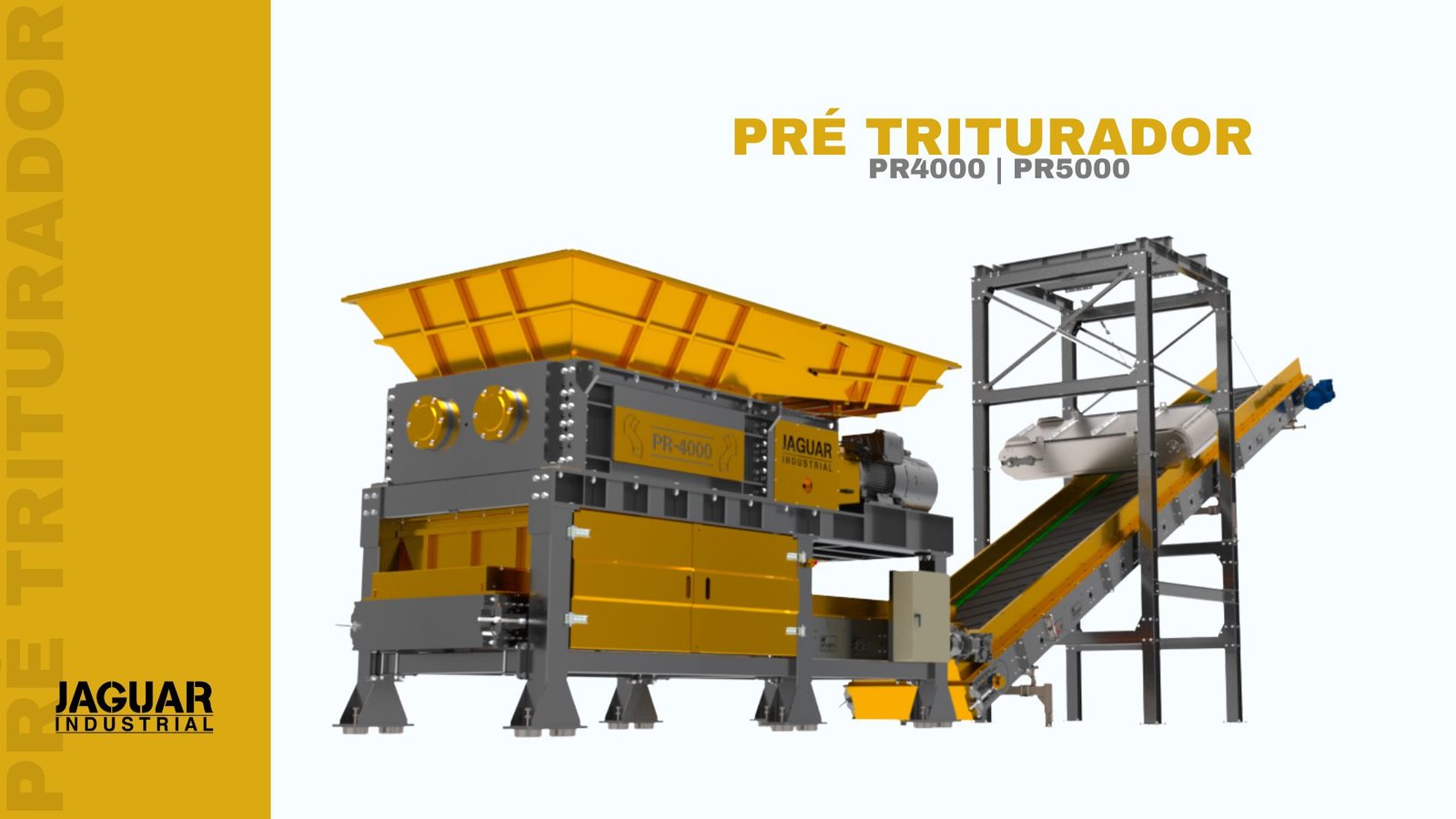
The PR4000 and PR5000 pre-shredders perform volume reduction of heavy materials before downstream processing stages. They do not aim for fine particle size — the goal is to break bales, furniture, pallets and bulky waste to stabilize material flow.
With stable feed, secondary equipment (shredders, screens, separators) operates at rated capacity and experiences less wear.
Asynchronous Dual-Shaft Technology
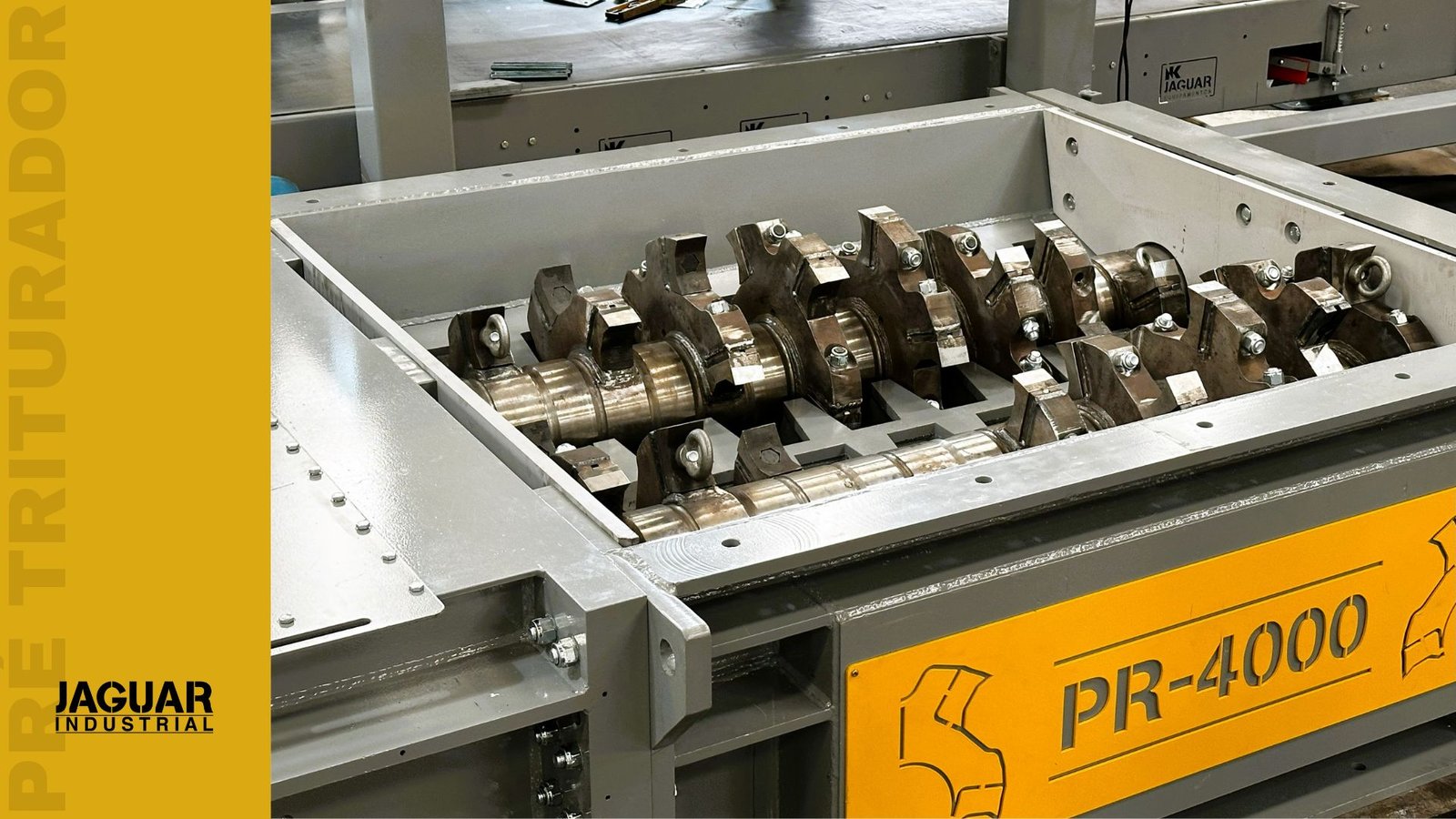
Two cutting shafts rotate at different speeds and opposite directions, creating shear that pulls and tears the material.
- Aggressive feed: whole bales, furniture and pallets are pulled into the chamber
- Jam prevention: shearing continuously cleans the chamber, reducing tangling of fibrous materials
- 20-40 RPM with high torque: maximum force, lower energy consumption, less noise and minimal fines generation
- Automatic reversal: detects overload, reverses shafts to release material and resumes operation
PR4000 vs. PR5000
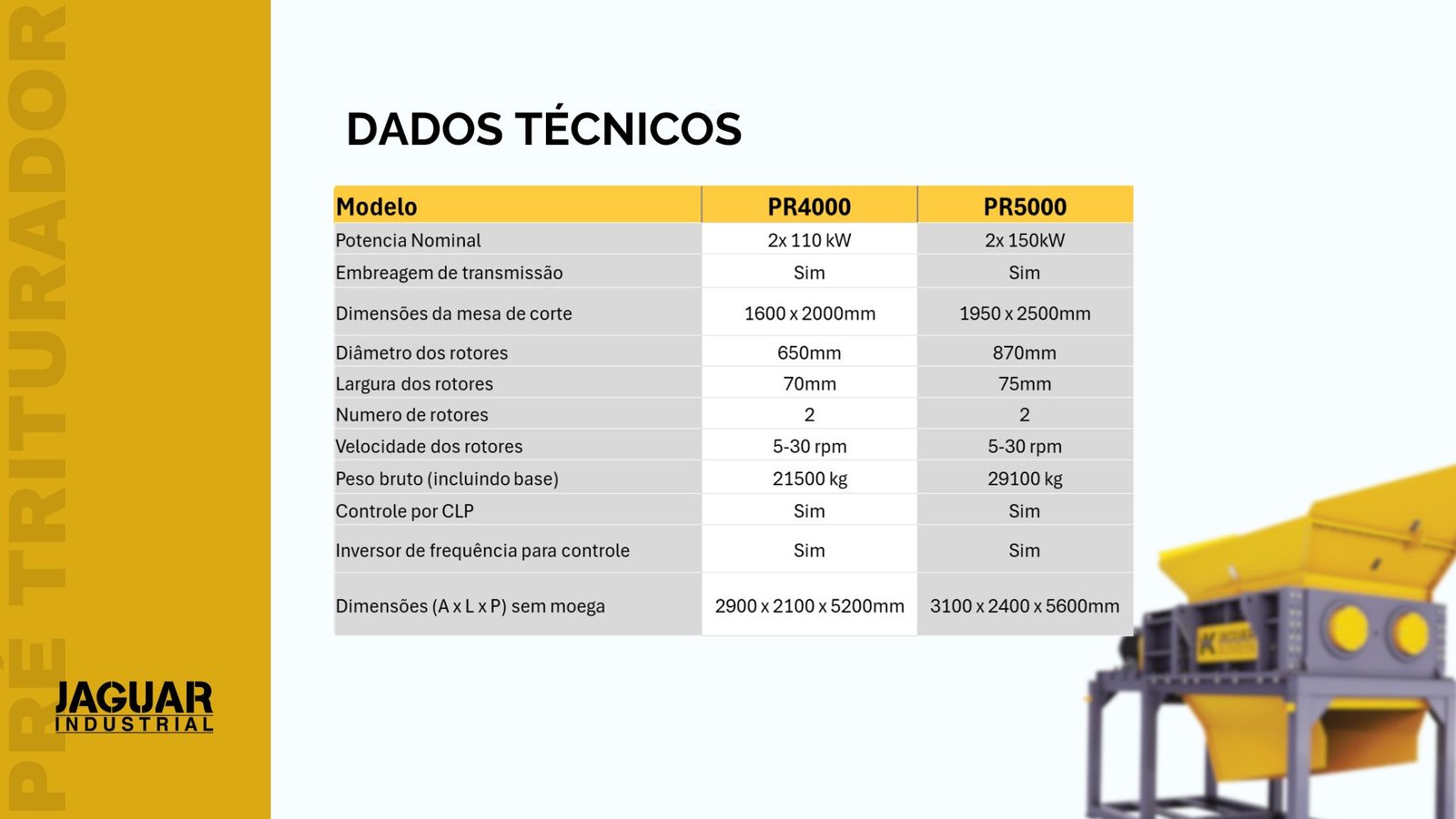
| Feature | PR4000 | PR5000 |
|---|---|---|
| Total power | 2x 110 kW (300 HP) | 2x 150 kW (400 HP) |
| Cutting table | 1,600 x 2,000 mm | 1,950 x 2,500 mm |
| Rotor diameter | 650 mm | 870 mm |
| Speed | 20-40 RPM | 20-40 RPM |
| Profile | Mid-size plants, compact dimensions | Large scale, extremely bulky materials |
The PR5000 is for high-volume operations that cannot stop. The PR4000 covers most industrial and recycling applications.
REGEN System (optional)
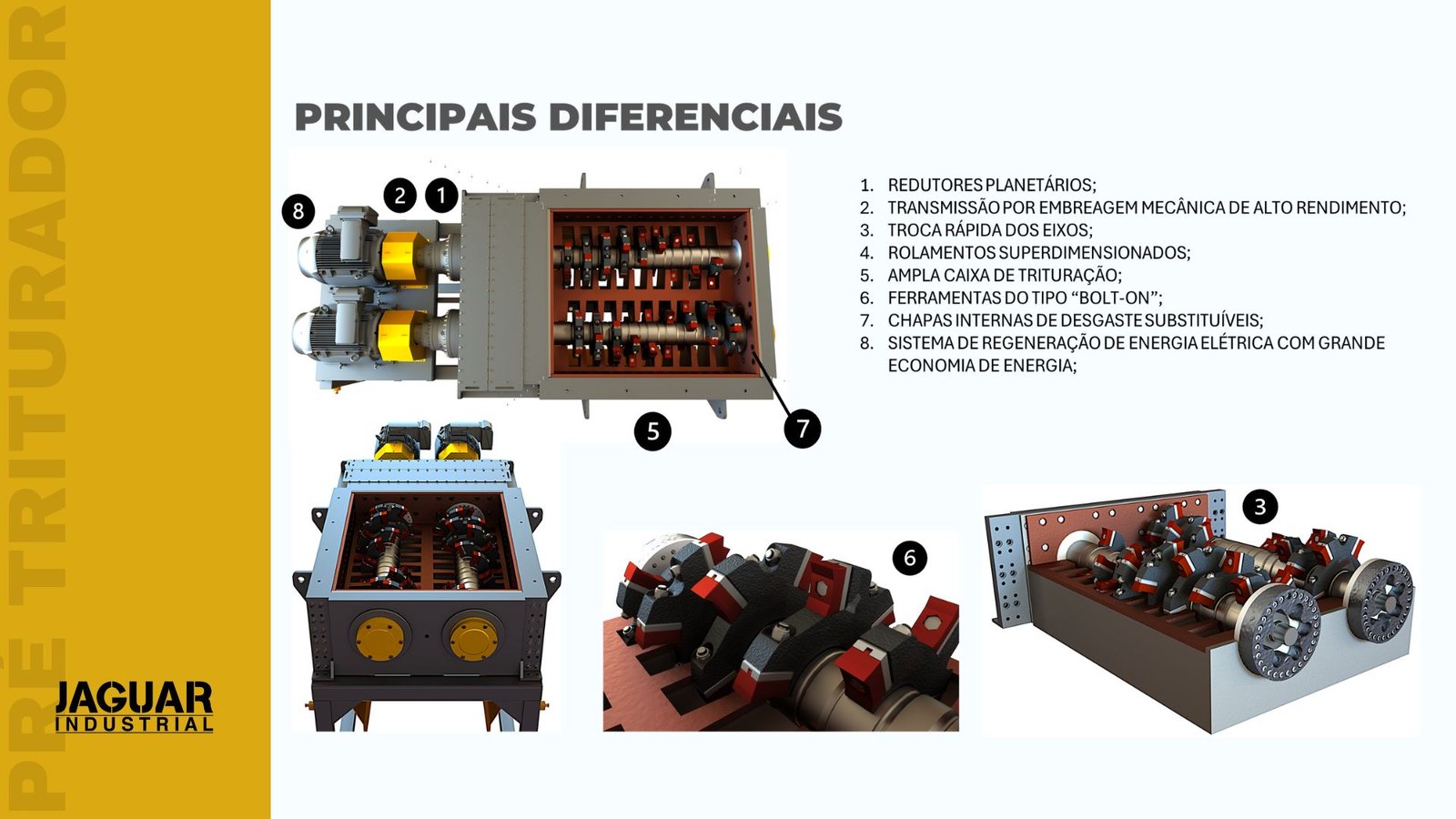
Regenerative drive that recovers energy during braking and reversals, returning it to the power grid. In conventional systems this energy is dissipated as heat in resistors.
- Up to 15% reduction in energy costs
- Smooths peak power demand (reduces demand surcharge penalties)
- Less stress on transformers, cables and circuit breakers
- ROI in 18-24 months in continuous operations with multiple daily reversals
Blades with Hardox Inserts
The system uses Hardox steel inserts (400-500 HBW) bolted to the blade body.
No-weld replacement — any mechanic can replace inserts with an impact wrench in minutes. Only worn inserts are changed, not the complete assembly.
Service life up to 3x longer than conventional steels. Resistance to abrasion (silica, soil in biomass) and impact (logs, wood with nails).
Applications
- MSW: garbage bags, mixed organics and recyclables for sorting
- Industrial and commercial waste: pallets, packaging, plastics, cardboard, bulk bags
- Bulky waste: furniture, mattresses, carpets, sofas
- RDF/SRF: controlled particle size for cement kilns and boilers
- Plastics: opening PET, HDPE, LDPE bales for washing and extrusion
- Light metal scrap: aluminum, white goods
- Biomass and pruning: branches, logs, urban pruning for composting chips or energy
- Industrial wood: pallets, crates, sawmill waste, demolition wood
- C&D waste: wood, gypsum, plastics from demolitions
- Packaging: plastic films, corrugated cardboard, multi-layer
Standard Features
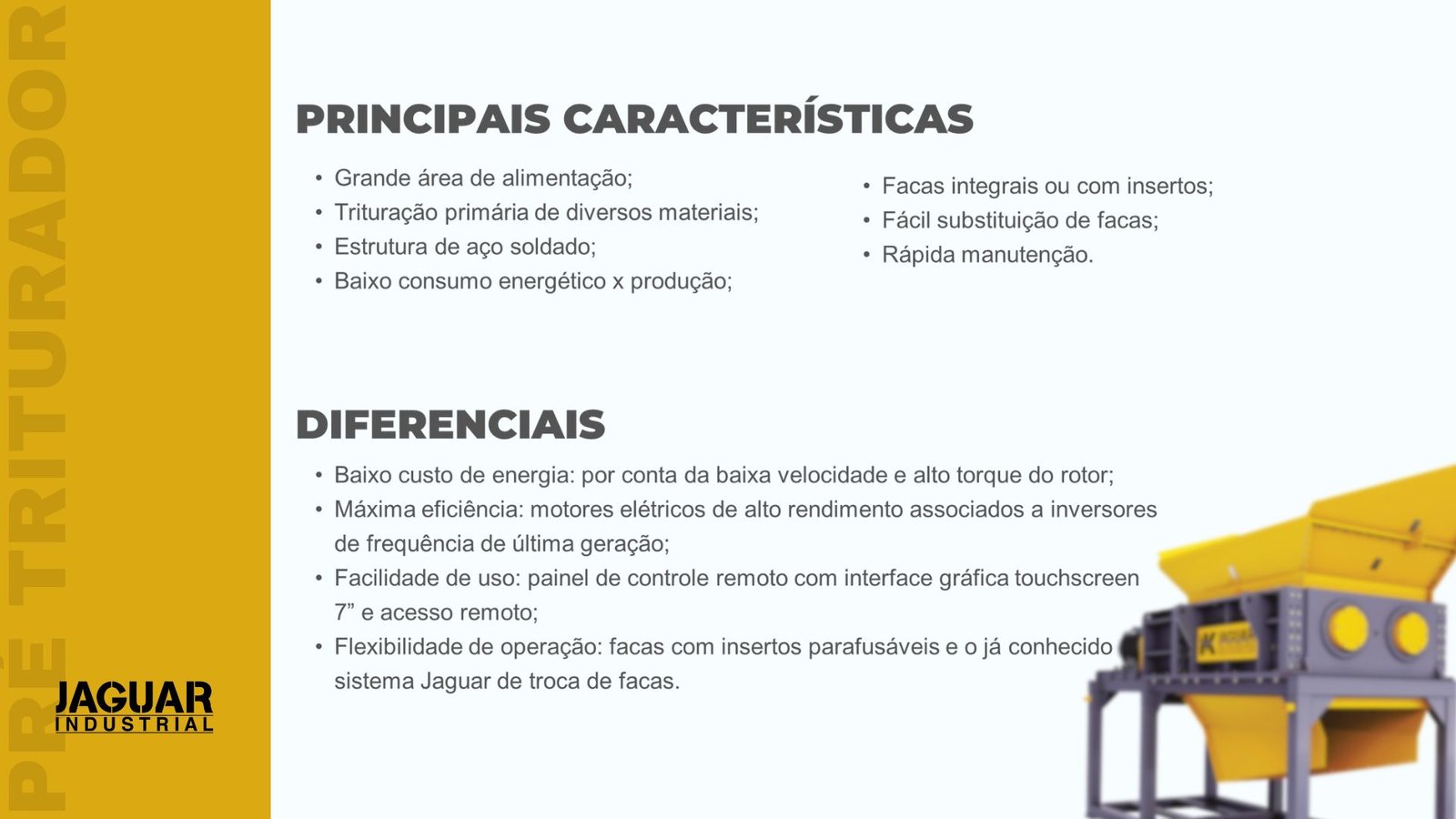
- High-strength steel asynchronous dual shafts
- Blades with replaceable Hardox inserts
- Automatic reversal
- PLC control panel
- Welded steel frame
- Heavy-duty bearings
- Contaminant sealing
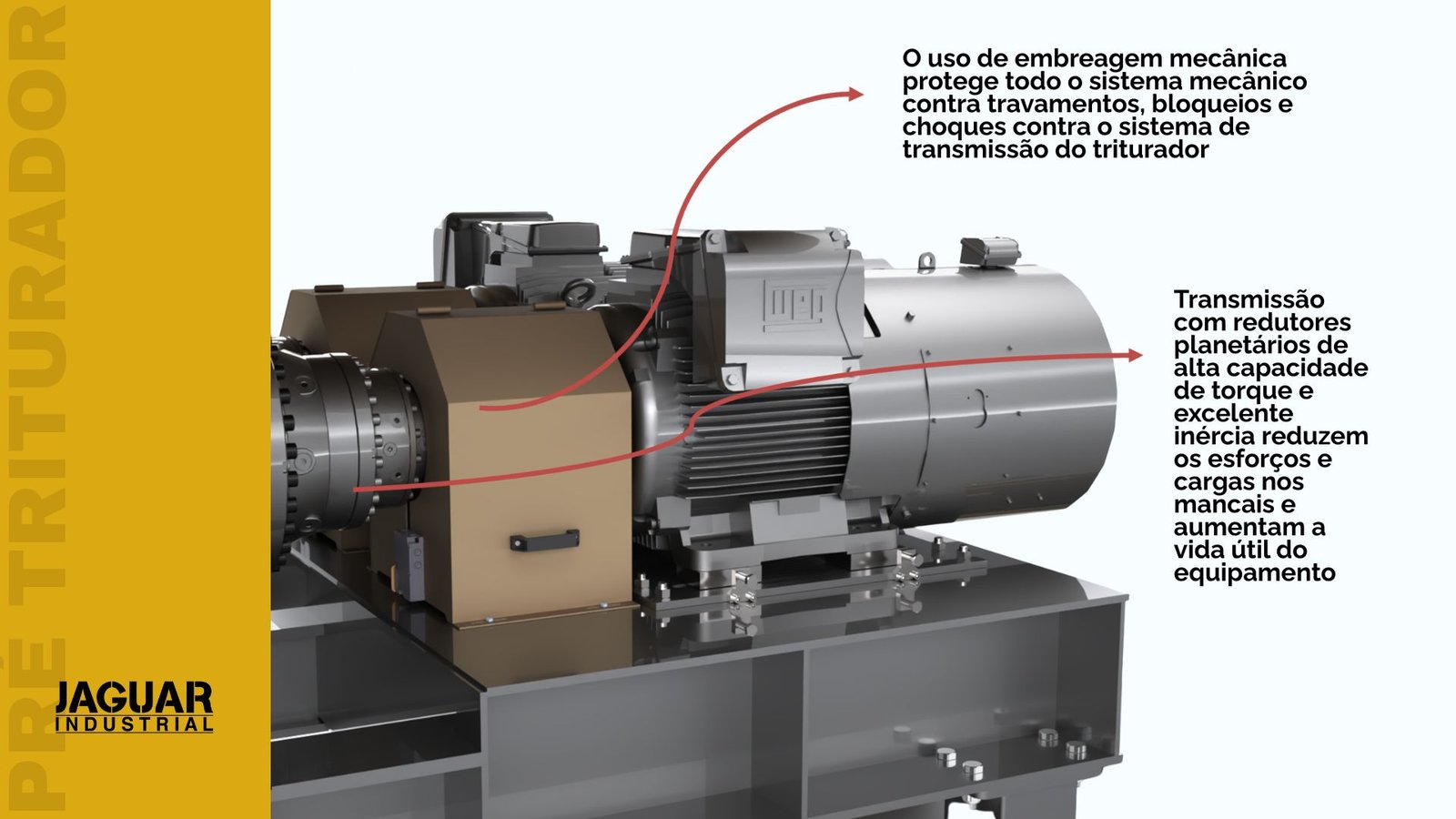
- High-efficiency electric motor
- Carbon steel stand
Optional Features
- Variable frequency drive with REGEN system
- Infeed conveyor with flow control
- Discharge conveyor
- Hopper with hydraulic pusher
- Dust suppression
- Acoustic enclosure
- Remote control
- Remote monitoring and telemetry
Frequently Asked Questions
Does the pre-shredder replace my current shredder? No. It prepares material so the secondary shredder works with more uniform feed, increasing efficiency and service life. It is a complement.
What is the noise level? Low. Operation at 20-40 RPM generates less noise and dust than high-speed shredders.
How is maintenance handled? Blades with replaceable Hardox inserts using an impact wrench. No welding, no specialized training.
Does it integrate with my existing line? Yes. The engineering team designs the integration including conveyors, structures and automation.
Does it process metals? Light scrap (aluminum, white goods) and waste with metal components, yes. For heavy scrap (structural steel), we recommend specialized equipment.
Does it process biomass and wood? Yes. Hardox inserts resist silica abrasion and contaminants. Asynchronous shafts prevent tangling of fibrous materials.