RDF Production for Co-Processing
RDF is a solid fuel processed from waste not recovered for material recycling — contaminated plastics, soiled paper, textiles, wood, rubber. It goes through sorting, inert removal, shredding and homogenization. Raw MSW has an NCV of 1.91-2.87 Gcal/t and 40-50% moisture; processed RDF achieves 3.59-5.98 Gcal/t with moisture below 25%.
The main market is co-processing in cement kilns — temperatures above 1,450°C ensure complete destruction and ash incorporation into clinker. The Cement Technology Roadmap (SNIC/ABCP, 2019) projects 35% thermal substitution by 2030 and 55% by 2050. Currently, 26% of the cement industry energy matrix uses alternative fuels.
NBR 16849:2020 classifies municipal solid waste for energy purposes (RSUE) along three independent axes: NCV, chlorine and mercury.
NBR 16849:2020 Specifications
Each batch receives one class per axis — for example, P1, C2, H1. Moisture and ash are not part of the classification: they remain operational parameters, set by the buyer’s specification.
NCV (dry basis):
| Class | NCV (Gcal/t) | Typical profile |
|---|---|---|
| P1 | >= 4.75 | Selected industrial waste |
| P2 | 3.58 to < 4.75 | Post-industrial waste |
| P3 | 2.39 to < 3.58 | Processed MSW with sorting |
Classification uses the lower limit of the mean, with 95% probability.
Chlorine (as received):
| Class | Chlorine (% m/m) |
|---|---|
| C1 | <= 0.5 |
| C2 | > 0.5 to <= 1.5 |
| C3 | > 1.5 to <= 3.0 |
Classification uses the upper limit of the mean, with 95% probability.
Mercury (as received, mg/kg):
| Class | Arithmetic mean | 80th percentile (P80) |
|---|---|---|
| H1 | <= 0.10 | <= 0.20 |
| H2 | 0.10 to 0.25 | 0.20 to 0.50 |
| H3 | 0.25 to 0.50 | 0.50 to 1.00 |
Classification combines the arithmetic mean and the 80th percentile (P80) of sampling.
Moisture and ash (outside the classification):
The standard assigns no class or limit to moisture and ash. They enter as operational parameters in the buyer’s specification (the cement plant): high moisture lowers NCV and raises transport cost; ash is incorporated into clinker.
Production Process
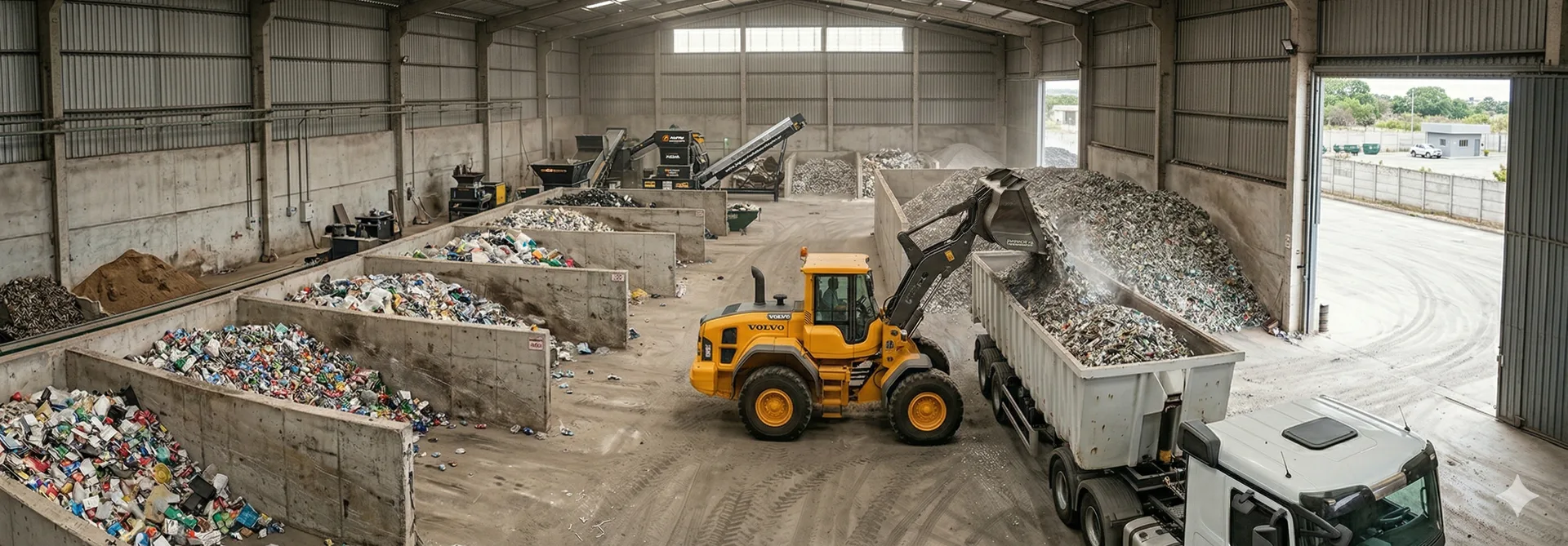
- Reception and pre-sorting — Removal of bulky, hazardous or incompatible materials (batteries, lamps, Class I waste).
- Pre-shredding — PR Series — Bulky waste (mattresses, furniture, large plastics) reduced to 150-300 mm. PR4000 (200 hp, 15-20 ton/h) or PR5000 (250 hp, 20-25 ton/h).
- Inert and metal separation — Magnetic separators (ferrous), eddy current separators (non-ferrous), trommel screens or disc classifiers (glass, stones, inerts).
- Recyclable sorting (optional) — Manual Sorting Station (MSS) for PET, HDPE, clean cardboard recovery before final shredding; the recovered recyclables can be sold, adding a revenue stream.
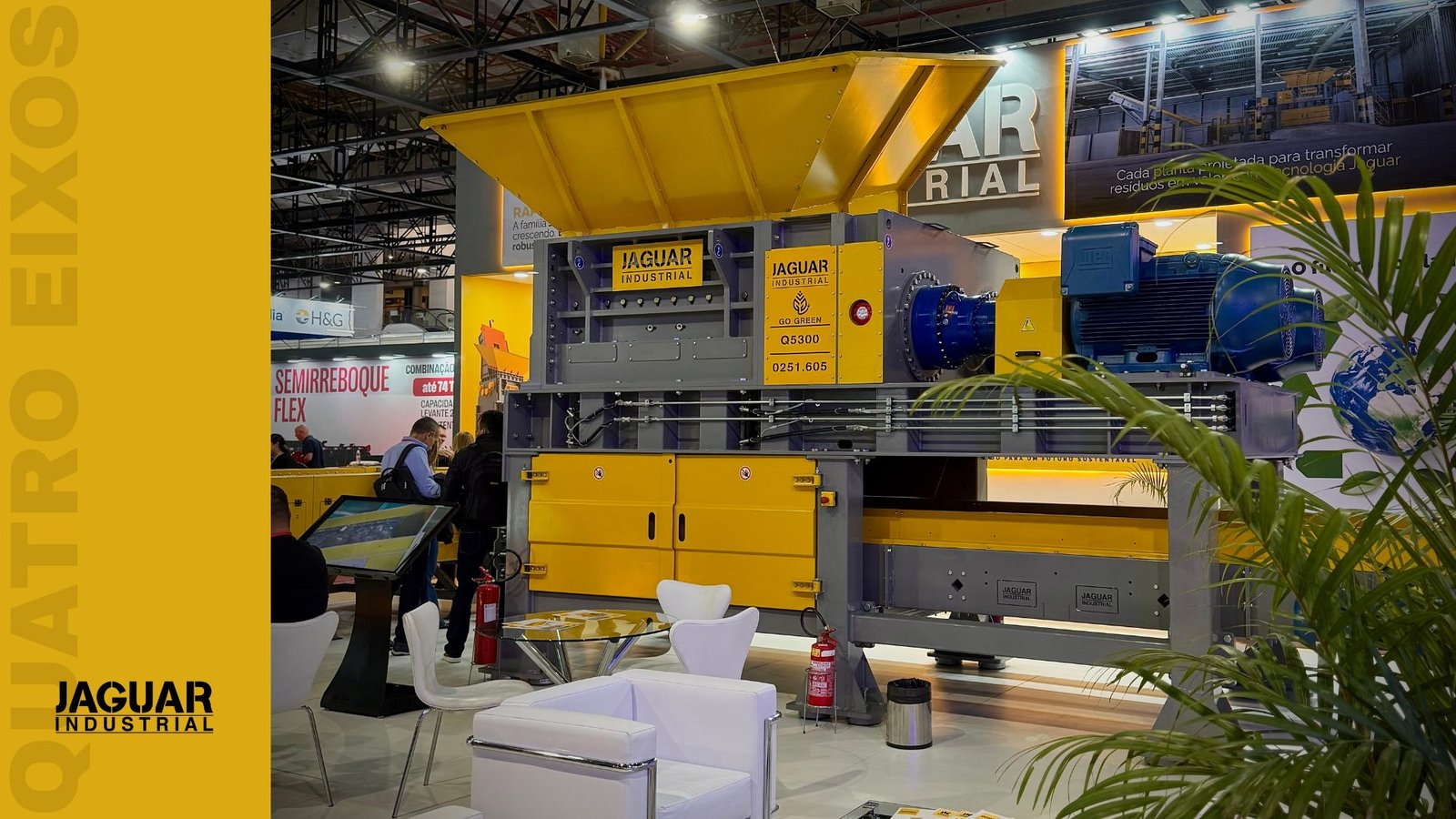
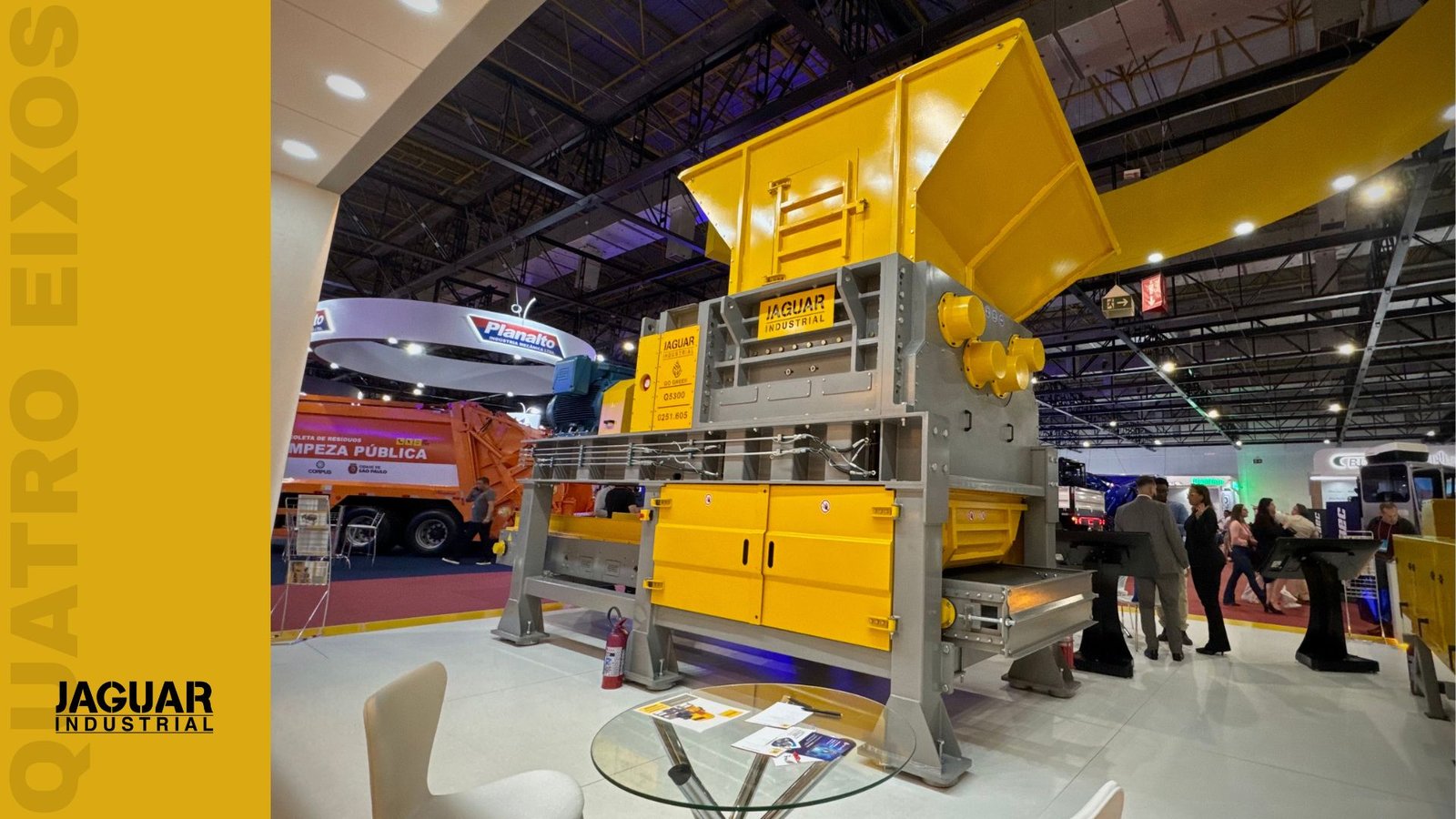
- Final shredding — Serie Q or RAPTOR — Uniform particle size per customer specification (typically 20-80 mm for cement kilns).
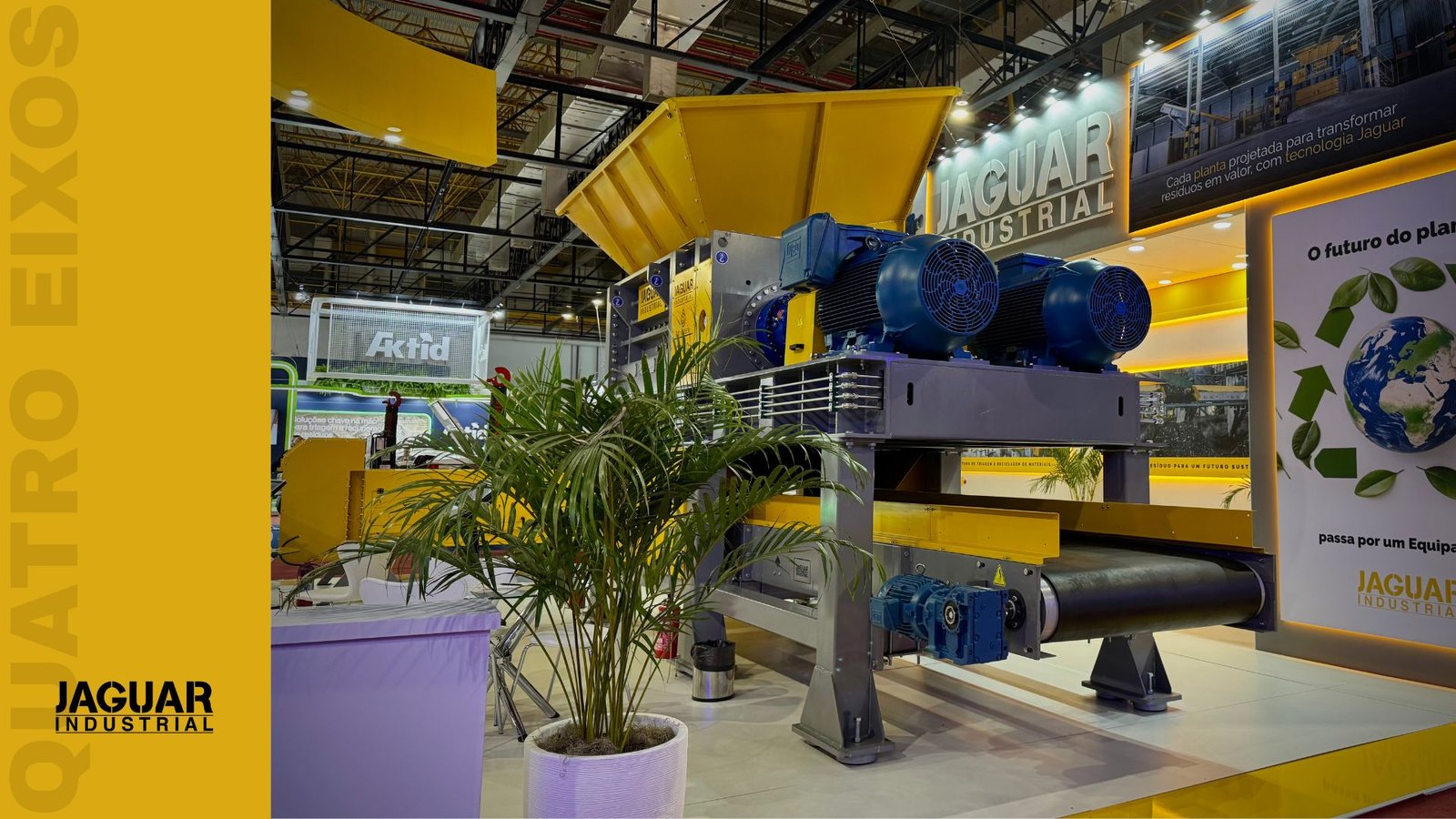
- Dense and contaminated waste: Serie Q (4-shaft) — shearing with internal classification screen, built for continuous operation. Models Q1500 to Q3000, 75-400 hp, 3-8 ton/h.
- Light post-industrial waste: RAPTOR — uniform particle size in a single pass with integrated screen. RAPTOR 3000 S87, 250 hp, 5-8 ton/h.
- Quality control — Sampling and analysis per NBR 16849:2020. Storage in covered warehouse.
Technical Challenges
Chlorine control: PVC is the main source. Manual sorting (MSS) or NIR separation before shredding reduces chlorine from 1.2-1.5% to below 0.9%, keeping the RDF within classes C1 or C2 and widening acceptance at the cement plant.
High moisture (MSW): Raw MSW has 40-50% moisture. Natural drying (3-7 days in ventilated warehouse) or prioritize post-industrial waste (natural moisture 5-15%).
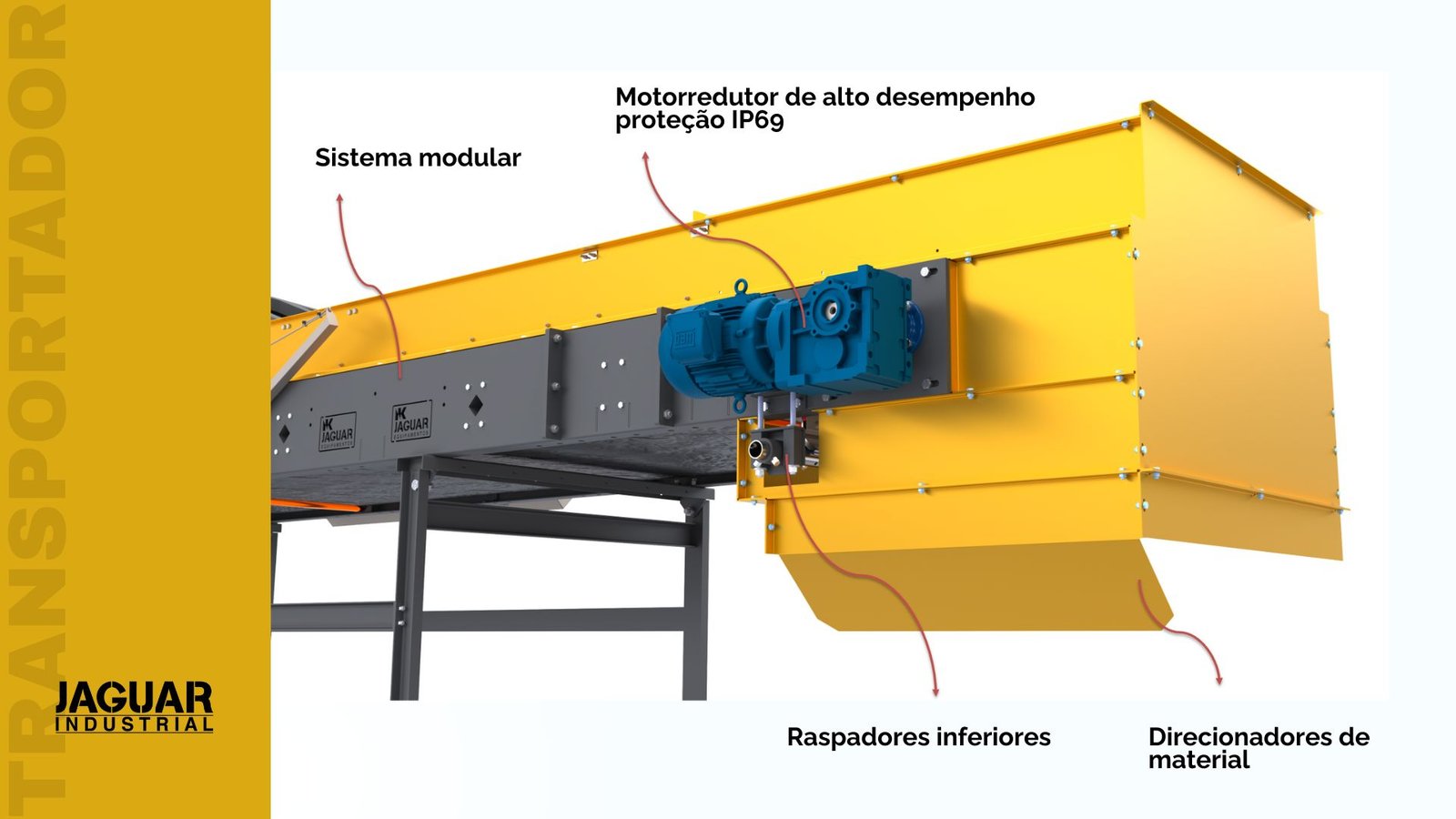
Heterogeneity: Mixed waste jams simple equipment. Multiple separation stages before final shredding. Serie Q is built to process heterogeneous materials reliably.
Logistics: RDF has low density (200-400 kg/m3). Locate plant within 100-300 km of cement plants. Baling increases density to 600-800 kg/m3.
Equipment for RDF
| Stage | Equipment | Power | Capacity |
|---|---|---|---|
| Pre-shredding | PR4000 | 200 hp | 15-20 ton/h |
| Pre-shredding | PR5000 | 250 hp | 20-25 ton/h |
| Final shredding (dense) | Q1500 | 75-150 hp | 3-5 ton/h |
| Final shredding (dense) | Q2000 | 150-300 hp | 4-6 ton/h |
| Final shredding (dense) | Q3000 | 300-400 hp | 6-8 ton/h |
| Final shredding (light) | RAPTOR 3000 S87 | 250 hp | 5-8 ton/h |
| Manual sorting | MSS-6000/9000/12000 | — | 6-12 stations |
| Magnetic separation | Magnetic separators | — | Continuous |
| Classification | Trommel Screen | 10-40 kW | Up to 210 m3/h |
| Classification | Disc Classifier | 5-15 kW | 5-15 ton/h |
Operator Profile
- Landfill operators recovering value from waste before disposal, reducing landfilled volumes.
- Industrial waste management companies processing post-industrial rejects (plastics, paper, textiles) into RDF with NCV in classes P1 or P2.
- Municipalities and consortia with landfills nearing capacity.
- Cooperatives incorporating RDF as a final stage after sorting.
Frequently Asked Questions
What is RDF? RDF is Refuse-Derived Fuel — a solid fuel produced from the fraction of waste that cannot be recovered for material recycling (contaminated plastics, soiled paper, textiles, wood, rubber), processed to meet NCV requirements and buyer operational parameters such as moisture, chlorine and ash. Its main market is co-processing in cement kilns.
Can the shredder process raw MSW directly? Not as a single step. An RDF line combines pre-sorting, pre-shredding, inert and metal separation, and final shredding. Viability and configuration depend on the composition of the incoming waste — sizing starts with material characterization.
What is the difference between pre-shredding and final shredding? Pre-shredding (PR Series) breaks down bulky, mixed waste to open access for the separation stages. Final shredding (Serie Q or RAPTOR), performed after separation, defines the uniform particle size required by the RDF buyer — typically 20-80 mm for cement kilns.
What does NBR 16849:2020 require? The standard classifies municipal solid waste for energy purposes (RSUE) along three independent axes: NCV (classes P1 to P3, dry basis), chlorine (C1 to C3, as received) and mercury (H1 to H3, as received). Each batch receives one class per axis, e.g., P1, C2, H1. Moisture and ash have no limits in the standard — they are set by the buyer’s specification. Plant quality control (sampling and analysis) follows this standard.
How do I size an RDF plant? The starting inputs are: type and composition of available waste, daily or monthly volume, moisture, target NCV class (P1, P2 or P3) and destination (cement plant, logistics distance). With these, Jaguar engineering defines the combination of pre-shredder, separation and final shredder. Talk to our engineering team.