End-of-Life Tire Recycling
Brazil generates 450,000 tons of end-of-life tires per year (Reciclanip and the official IBAMA report). CONAMA Resolution No. 416/2009 requires manufacturers and importers of new tires above 2 kg to properly dispose of one end-of-life tire for every new tire sold in the replacement market, with equivalence measured by weight. Non-compliance can constitute an administrative offense subject to fines from R$ 5,000 to R$ 50 million, a range set by Decree No. 6,514/2008 rather than by the Resolution itself. Landfill disposal and open-air burning are prohibited.
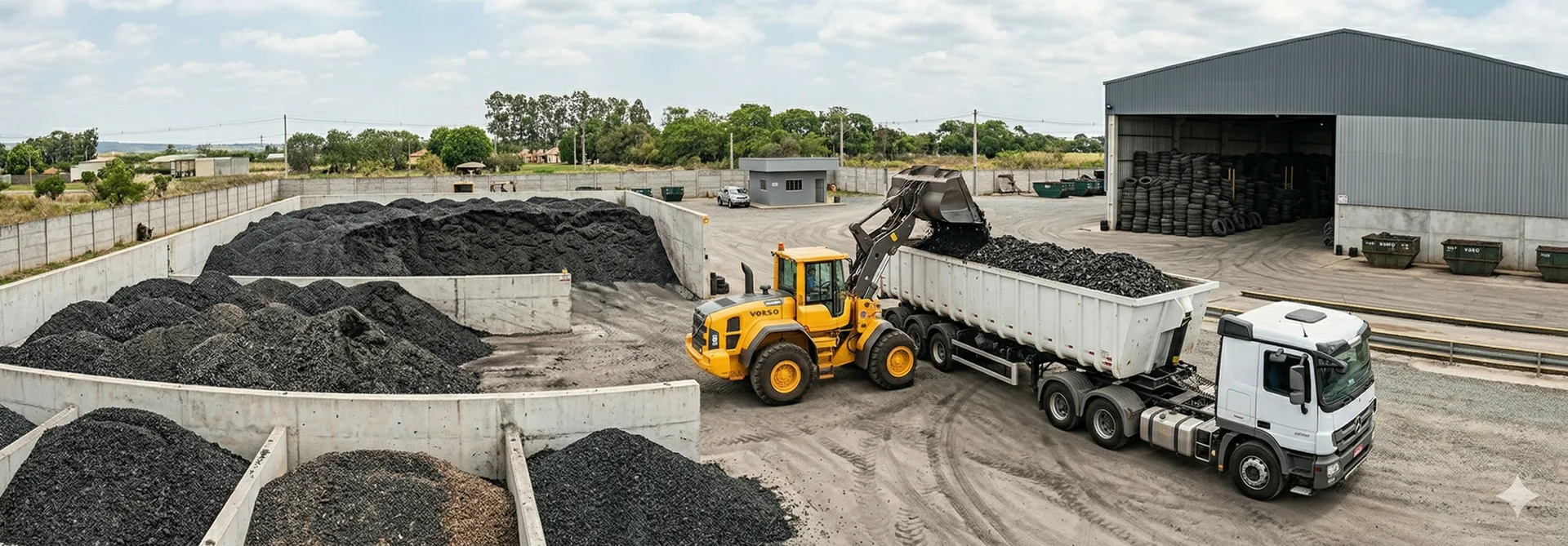
Shredding transforms end-of-life tires into a marketable product. Tire chips supply rubberized asphalt, co-processing in cement plants, industrial flooring and drainage works, priced at R$ 450-800/ton depending on particle size.
Process
Collection and preparation — Tires collected from reverse logistics points, tire shops and dealers. Sorting by type (passenger, truck, off-road). Removal of metal rims when present.
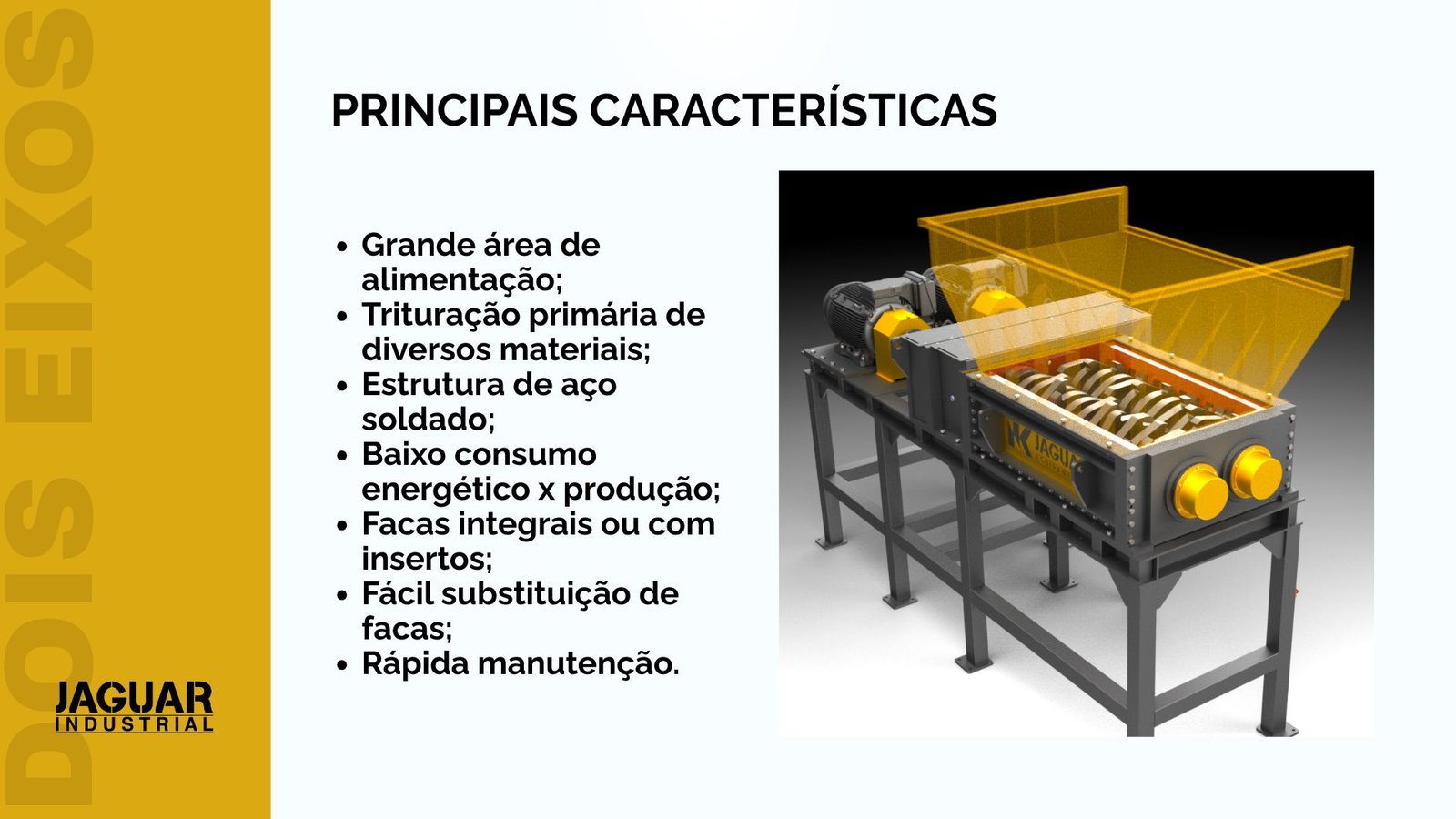
Primary shredding — D Line — Radial car and truck tires enter whole; OTR (off-the-road) tires from construction and mining machinery enter pre-cut into 4-8 pieces. Low rotation (20-40 RPM) with high torque processes steel-reinforced rubber. Slip clutch absorbs bead impacts. Automatic reverse expels non-shreddable materials. Output size: 50-150 mm, adjustable.
Magnetic separation — The ferrous metal extractor removes steel beads and radial steel wires.
Secondary granulation (optional) — For flooring (1-10 mm) or rubber products (1-5 mm), chips pass through secondary granulators.
Classification and commercialization — Chips classified by particle size and stored for sale.
End Uses and Particle Size by Application
| Application | Particle Size | Notes |
|---|---|---|
| Drainage and civil works | 20-100 mm | Lightweight and permeable |
| Co-processing in cement plants | 50-100 mm | NCV 6,500-8,000 kcal/kg |
| Flooring and playgrounds | 1-10 mm | |
| Rubber products | 1-5 mm | |
| Rubberized asphalt | 0.8-1.0 mm | 40-60% longer lifespan than conventional |
Equipment: D57 Shredder
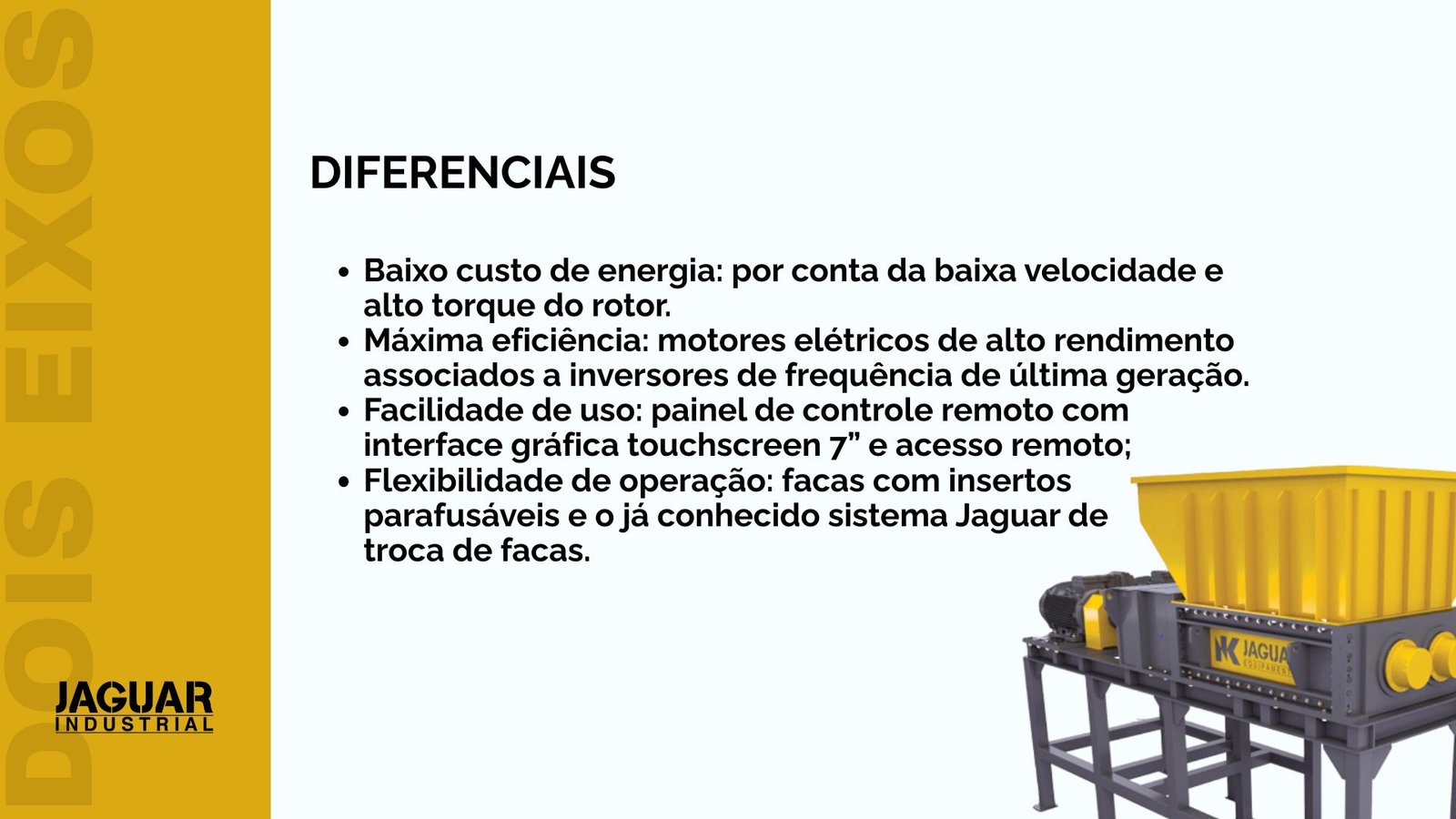
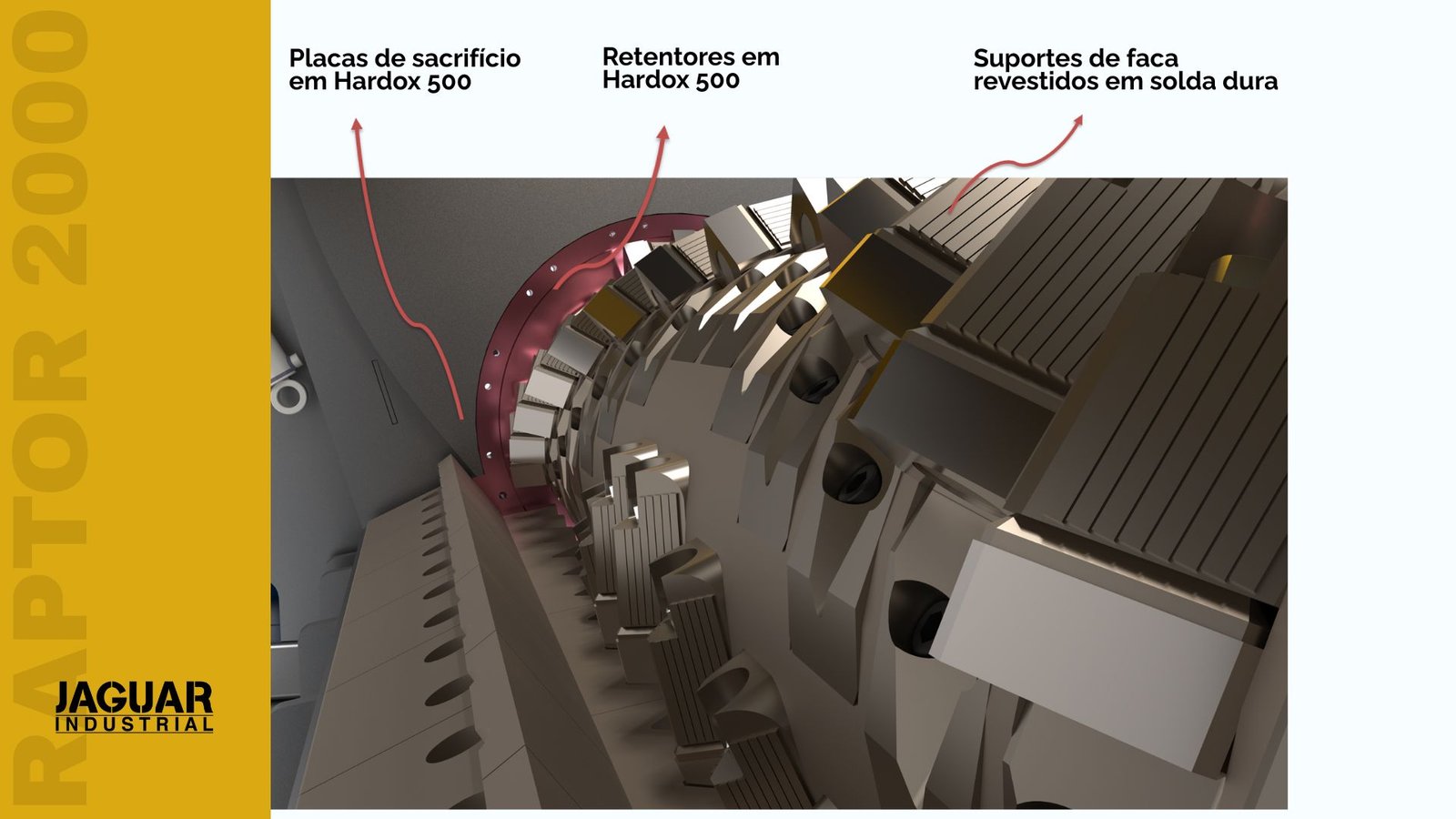
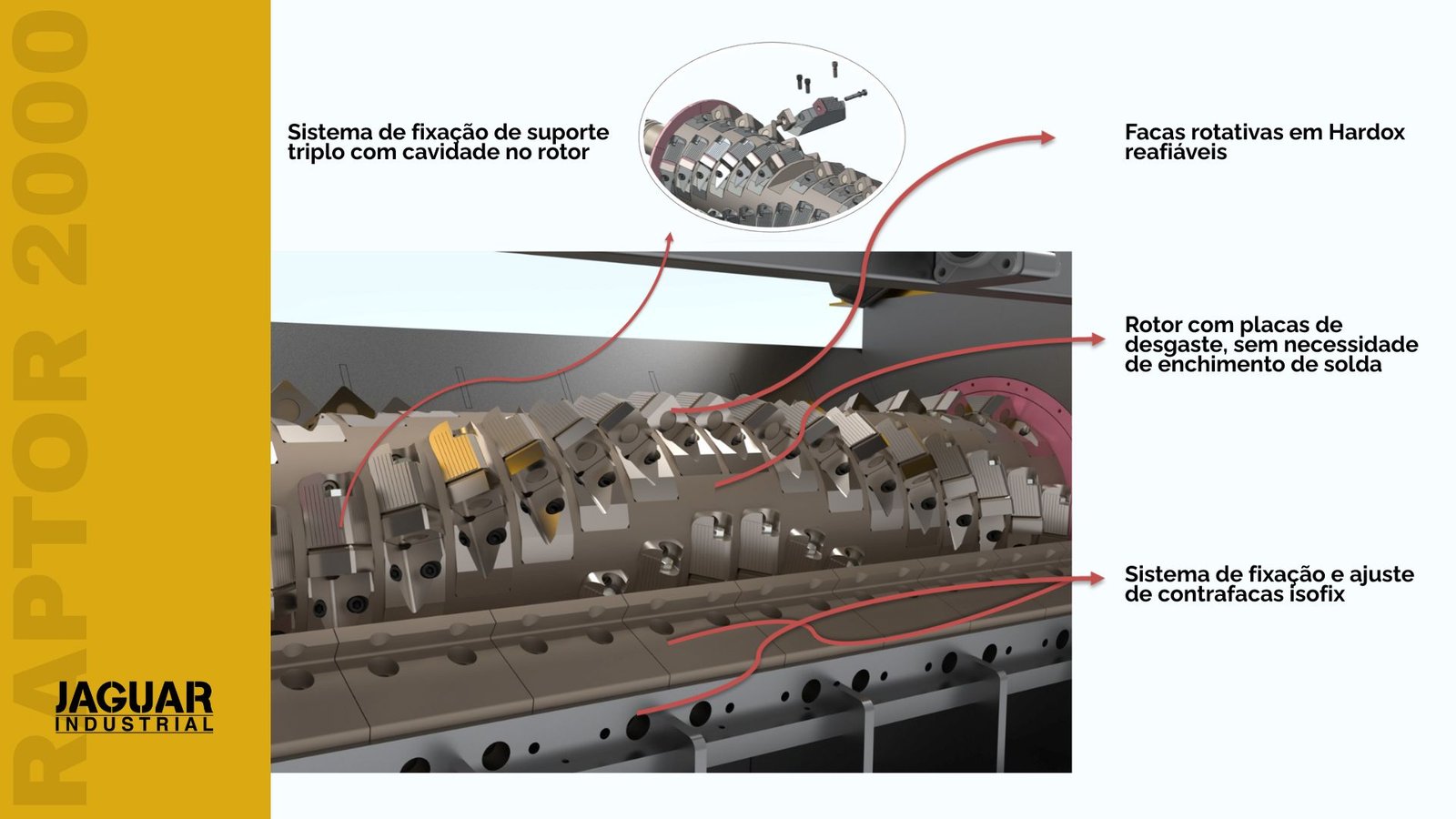
The line uses the D57 shredder, with bolted, replaceable blades. Full technical details on the product page.
| Feature | D57 |
|---|---|
| Power | 125 hp |
| Cutting chamber | 1,250 x 1,375 mm |
| Rotor diameter | 665 mm |
| Blade width | 50-100 mm |
| Rotation | 20-40 RPM |
| Output size | 50-150 mm (adjustable with classifier) |
| Weight | 14,600 kg |
| Capacity | 5-20 ton/h |
- Bolted blades with replaceable inserts.
- Quick insert replacement with hand tools, no welding required.
- Typical lifespan: 2,000-3,000 tons of passenger tires before insert change.
Other D Line models for tires
| Model | Power | Cutting chamber | Estimated capacity |
|---|---|---|---|
| D290 | 40 hp | 580 x 900 mm | Up to 1 ton/h |
| D365 | 75 hp | 710 x 1,025 mm | Up to 2 ton/h |
| D460 | 125 hp | 890 x 1,372 mm | Up to 3 ton/h |
| D535 | 200 hp | 1,068 x 1,610 mm | Up to 8 ton/h |
| D610 | 250 hp | 1,250 x 1,610 mm | Up to 15 ton/h |
- Capacities estimated for whole passenger tires.
- Actual capacity depends on tire type, preparation and particle size.
For higher capacity, the D610 dual-shaft shredder delivers up to 15 ton/h with 250 HP.
Equipment
Operator Profile
- Tire recyclers and waste managers meeting CONAMA 416/2009 targets and selling chips.
- Manufacturers and importers structuring their own reverse logistics.
- Co-processing operators receiving whole tires and shredding them to feed cement kilns.
Frequently Asked Questions
Does the shredder handle whole tires or require pre-cutting? Radial car and truck tires enter whole, without pre-cutting. OTR (off-the-road) tires from construction and mining machinery enter pre-cut into 4-8 pieces. Specifications are on the D57 shredder and D Line product pages.
Where does the processed material go? Chips supply co-processing in cement plants, rubberized asphalt, flooring and playgrounds, rubber products and drainage works, priced at R$ 450-800/ton depending on particle size. Particle size control is critical for material acceptance.
What is the difference between a single shredder and a complete line? The dual-shaft shredder delivers 50-150 mm chips. For fine particle sizes (1-10 mm, required for flooring and rubber products), the complete line adds magnetic separation of steel and secondary granulation. The choice depends on the final product you plan to sell.
How do I specify the right equipment? Define the predominant tire type (passenger, truck or off-road), the monthly volume, the desired output particle size and the destination for the separated steel. Actual capacity depends on tire type, preparation and particle size — the engineering team sizes the configuration for your operation.