
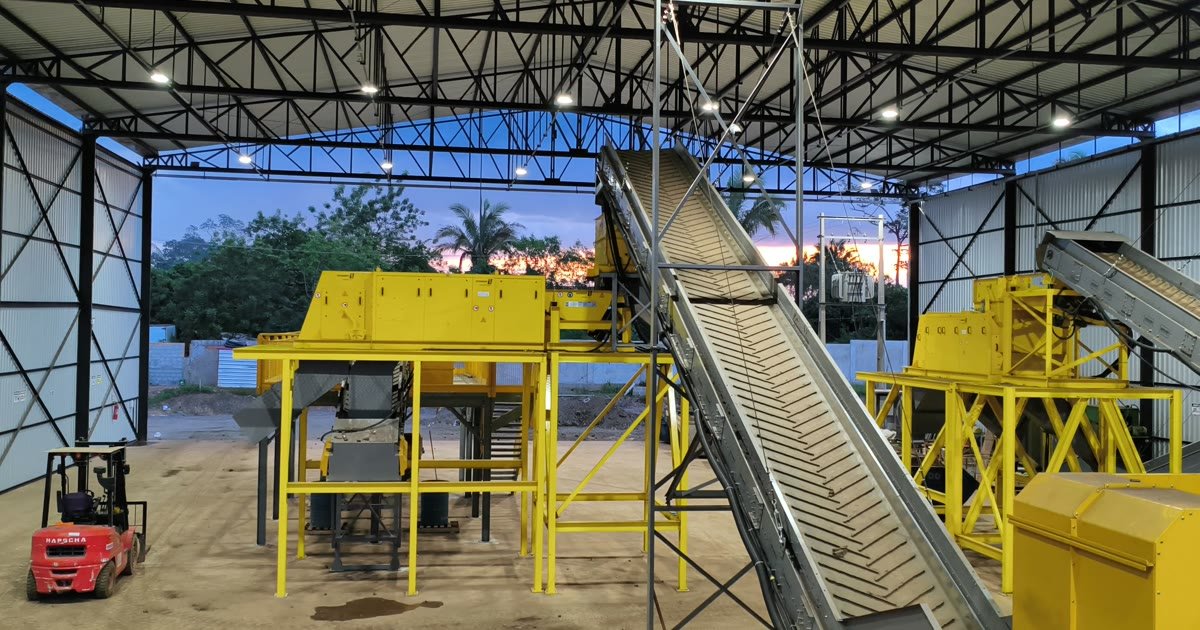
A recycling company had a stream that had already been processed but still contained value. Fluff — the light fraction left by scrap shredding — occupied yard space, carried recoverable metals and generated transport and disposal costs. Treating the entire stream as reject meant paying to discard raw material that could still return to the market.
The initial enquiry appeared to call for a machine. Jaguar Industrial identified a process decision.
Instead of opening with a catalogue and a price, the commercial team began with questions: what the material contained, how many tonnes had to enter each hour, which contaminants appeared, which products the customer wanted to recover, where the light fraction could go and what conditions were available to install and operate the line. The answers changed the conversation. The challenge was not simply size reduction. It was turning a mixed stream into products with economic destinations.
The project moved from assessment to engineering, from manufacturing to installation and from commissioning to remote support. In May 2026, the plant was completed, tested and accepted in writing by the customer at an approved capacity of 10 tonnes per hour. Ferrous and non-ferrous metals were recovered, while the light fraction was prepared for RDF production. The customer projects a payback period of approximately 12 months.
This case explains how the Jaguar process connected sales, industry and field execution to achieve that result.
The sale started with the customer’s problem, not the machine
An ASR separation plant does not begin with an equipment list. It begins with the material and the business result expected from the investment. Two streams may carry the same description and still require different solutions because moisture, particle size, metal content, contamination, operating hours and available outlets vary from one recycling operation to another.
That is why the commercial phase started with an operating assessment. Jaguar organized the customer’s need into a process view before closing the supply scope. Four questions had to be answered:
- how to receive the material without creating a bottleneck;
- how to prepare it for recovering the metals still present;
- how to separate products intended for different markets;
- how to turn the remaining light fraction into usable RDF.
The high-level process diagram became the bridge between the commercial opportunity and the industrial solution. It allowed the teams to discuss capacity, supply boundaries, interfaces with the available structure and each participant’s responsibilities. Only after that shared view existed did the scope become a proposal.
This sequence avoids a common mistake in ferrous scrap shredding plants: buying separate machines and trying to connect them later. A plant delivers results when feeding, classification, transport, separation, shredding, electrical work, automation and operation are considered as one system. Integration creates value at the interfaces that do not appear on an individual machine’s data sheet.
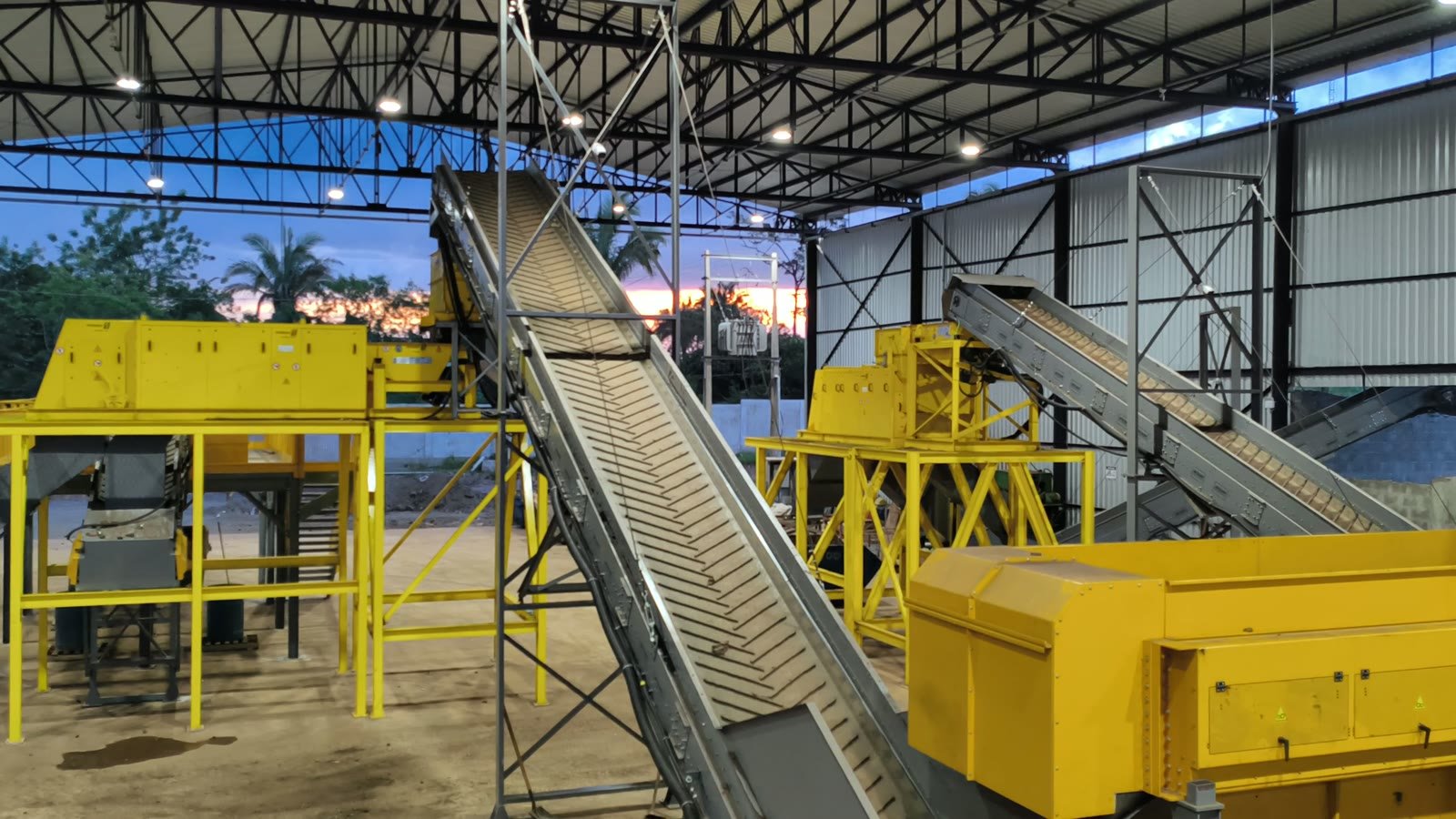
The layout integrates feeding, conveying, classification and separation in a single process flow.
Engineering turned the proposal into an executable plant
Once the commercial scope was aligned, engineering had to convert the concept into something that could be manufactured, transported, installed and operated. That transition requires more than equipment drawings. It requires coordination between disciplines, access planning, interface control and stable conditions between stages.
The solution combined material preparation, sorting, ferrous and non-ferrous separation, shredding and fuel production. Magnetic extraction, ferrous separation equipment and an eddy current separator were used within a larger architecture rather than treated as isolated answers.
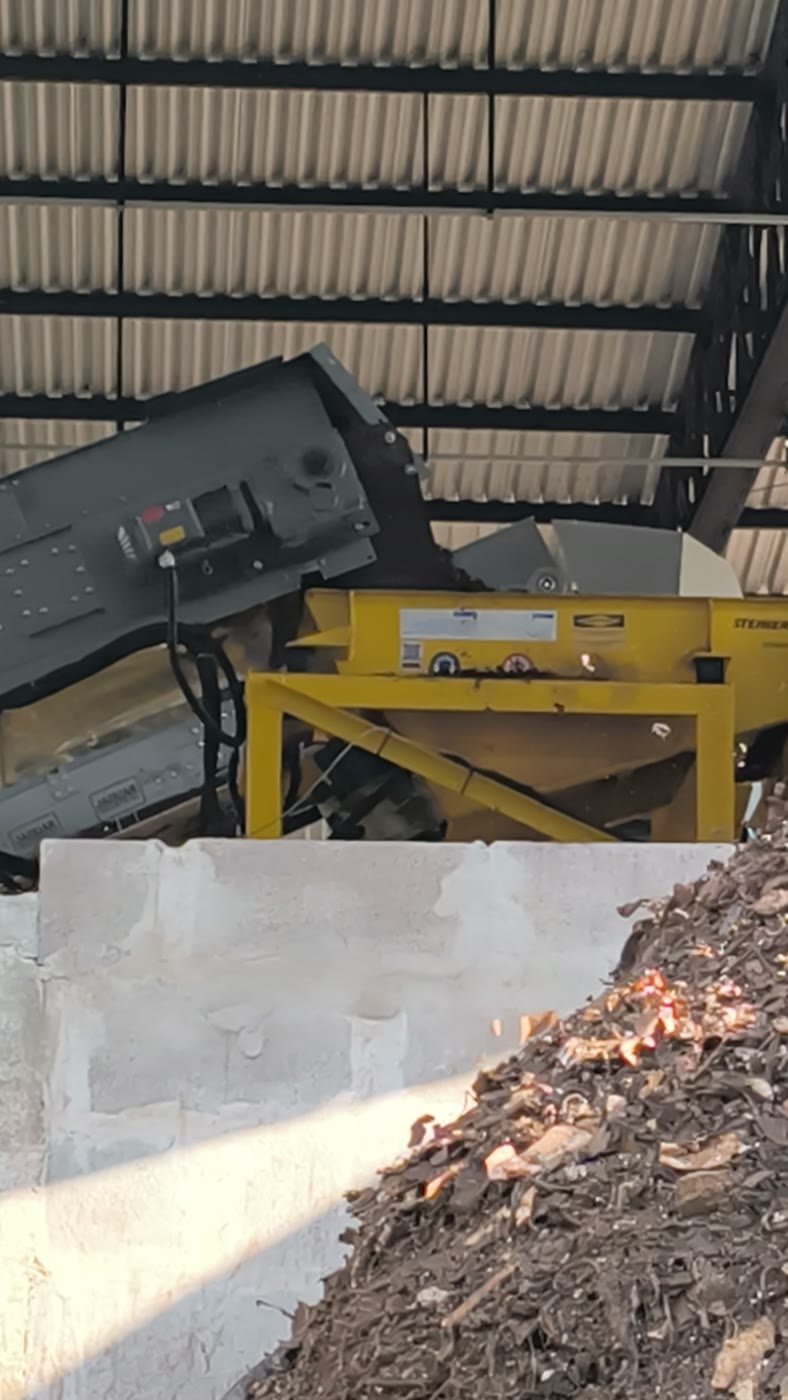
Separation stage applied to the ASR stream during operation.
This matters to anyone searching for a ferrous metal shredder, a non-ferrous shredder or separation equipment. Performance does not depend only on the technology selected. It also depends on what reaches the equipment, how consistently it is fed, how the material is distributed and how the surrounding stages work together. Jaguar coordinated those interfaces so that the assets would operate as a plant rather than as a collection of machines.
The customer took part in decisions affecting operation, maintenance, access and cleaning routines. The commercial process remained active inside engineering: every technical decision had to preserve the business outcome that justified the investment.
Magnetic separation acting on the ASR stream: ferrous leaves the material before the non-ferrous stage.
Industrial management kept the project connected
After engineering came a less visible but decisive phase: turning drawings and lists into coordinated manufacturing. The project involved workstreams moving at different speeds, procurement, components, structures, panels, conveyors, installation and specialist separation technologies.
Jaguar centralized follow-up so the customer would not have to manage independent suppliers without a common view. Schedules were revised as dependencies progressed. Communication linked sales, engineering, procurement, production and field teams, reducing the risk that a decision made in one area would emerge too late in another.
The same work prepared logistics. Packing lists, loading records and volume identification accompanied dispatch. During transport, a load transfer occurred without prior notice to the parties. Jaguar logged the event, preserved traceability and required formal communication from the carrier. All material reached the customer without damage.
The event shows why industrial installation starts before the site team enters the building. When documentary control exists, a logistics deviation can be handled quickly and responsibly. Without it, the discussion begins without a reliable record of what left the factory, how it was loaded or where the transport plan changed.
Installation is where every promise has to meet
Equipment arrival did not close the supply. It opened the stage in which the design, available structure, mechanical installation, electrical infrastructure, automation and operation had to converge at the same site.
Jaguar’s field team followed installation and coordinated the site interfaces. The original schedule had to be adjusted because part of the electrical infrastructure was not ready for the planned startup. Instead of treating this dependency as someone else’s problem and simply waiting, the team recorded the actual condition, aligned responsibilities and reorganized the work that could continue.
This approach separates equipment supply from project implementation. A machine supplier can finish at unloading. A process integrator must watch the critical path, explain the effect of outstanding work and help the customer put all workstreams in the right sequence.
The same principle applied to mechanical installation. Decisions made during engineering had to be confirmed in the real environment, with its access routes, existing structures and actual material behavior. Engineering support on site allowed decisions to follow operating reality rather than the drawing alone.
Field adjustments were part of the solution
Once material started moving, operation revealed points that earlier stages could not show completely. The customer requested adjustments to storage after sorting and to the direction of one discharge. The parties also began with different interpretations of the best arrangement.
Jaguar did not hide the disagreement or cover it with a generic explanation. The teams returned to the operating goal, compared alternatives, defined a clear scope and carried out the correction. The adjustment was installed and approved during commissioning.
This is normal in ASR waste shredding projects, where feed composition varies. Real waste tests a plant in ways that models cannot reproduce completely. Success is not the permanent absence of adjustments. It is the ability to identify them, decide quickly, execute with traceability and prove the result.
Because sales, engineering and installation remained connected, the customer did not need to rebuild the project history with every discussion. The need observed in operation returned to the people who understood the original proposal and became a defined field action.
Commissioning confirmed capacity and prepared the customer
Plant commissioning was more than a startup test. The team verified integrated operation, observed the material, completed final adjustments and trained the customer’s employees in operation, cleaning and maintenance points.
The line reached and had approved a capacity of 10 t/h of feed material. The test ran even with ferrous contamination above the level expected. In addition to confirming contracted capacity, that condition identified a further opportunity: remove more ferrous earlier to reduce wear, improve recovery quality and increase the economic return from the operation.
Commissioning was completed in May 2026 with the customer’s formal acceptance. The requested adjustments had been installed and approved. The customer’s team finished assisted operation able to run the line, recognize attention points and carry out the routines required to keep the process stable.
The result was not merely a machine running. It was an operation prepared to recover ferrous, separate non-ferrous metals and produce RDF from a fraction that had previously represented cost and lost value.
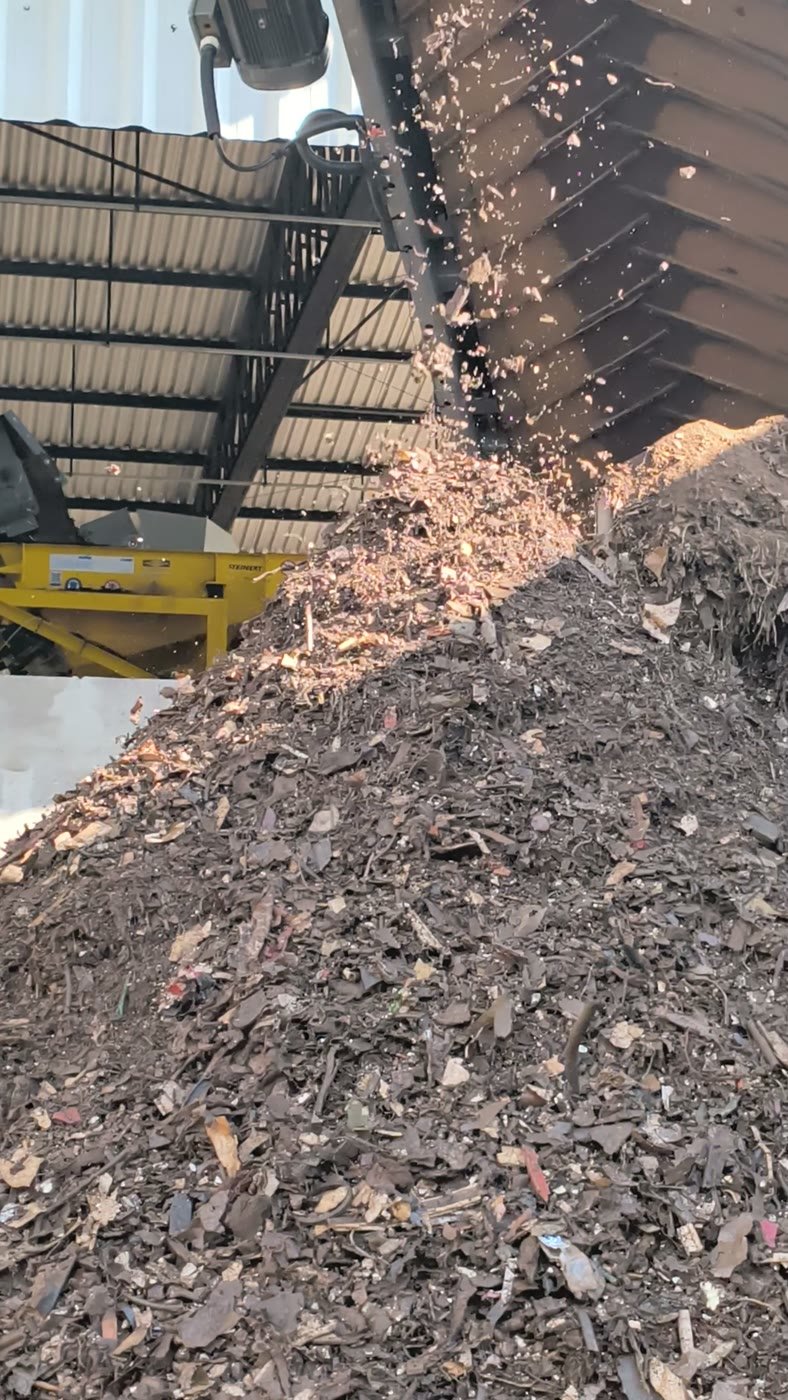
Processed material being discharged after the separation stages.
The complete line: feed, sorting, ferrous and non-ferrous separation and light fraction discharge.
Success continued after acceptance
Jaguar maintained support after completion. The plant remains connected to a remote monitoring and telemetry system, with reports, dashboards and operating data. This information supports maintenance, deviation detection and continuous performance improvement.
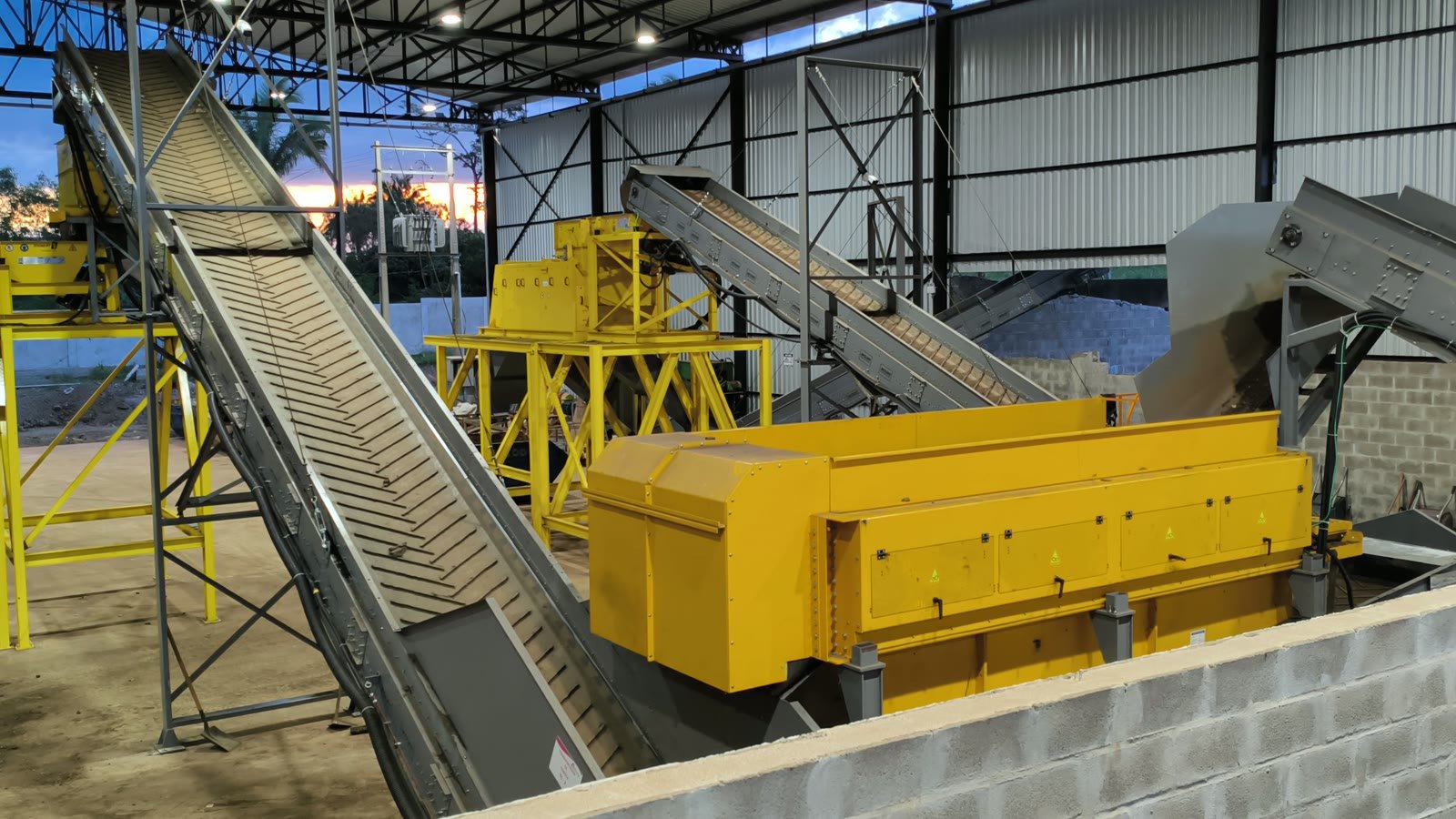
Installed system with integrated conveyors and process equipment.
After-sales support also preserves the project context. When a question appears, the analysis does not restart from zero: assumptions, capacity, adjustment history and operating behavior remain available to the technical team. This shortens response time and creates a foundation for further investment decisions.
With 10 t/h approved and the process stabilized, the customer began evaluating additional magnetic recovery at the inlet. The recommendation came from data observed during commissioning and aims to capture more metal, protect the rest of the line and increase plant return. The customer projects payback on the original investment in approximately 12 months.
The Jaguar process, from commercial assessment to result
The central delivery in this project was continuity between stages that are often contracted separately:
- Commercial assessment: understand material, economic objective and restrictions before proposing.
- Process design: turn the need into a clear architecture and a shared scope.
- Integrated engineering: coordinate equipment, structures, electrical work, automation, operation and maintenance.
- Industrial management: organize procurement, manufacturing, suppliers, schedule and documentation.
- Traceable logistics: identify volumes, record loading and respond to events.
- Field implementation: support installation, dependencies and decisions in the real environment.
- Commissioning and training: test capacity, correct, approve and prepare operation.
- Connected after-sales: monitor data, support maintenance and identify further gains.
This sequence turns purchasing intent into an industrial result. Jaguar’s authority in ASR separation, ferrous and non-ferrous separation and RDF shredder applications comes from more than manufacturing equipment. It comes from managing the entire project and remaining responsible until the operation delivers the contracted outcome.
If your company processes fluff, ASR or scrap reject that still contains metal, the first step is not selecting a machine. It is characterizing the material, defining the products that can be recovered and building a viable process to reach them.
Request an assessment of your material from Jaguar engineering → · Contact us on WhatsApp →